Most business owners I speak to have already been burned once. Either an agency sold them a senior team and then handed the project to juniors, or a freelancer from a marketplace stopped replying in week six. Both stories are common, and both are avoidable if you pick the right setup for your project and put a few safeguards in place.
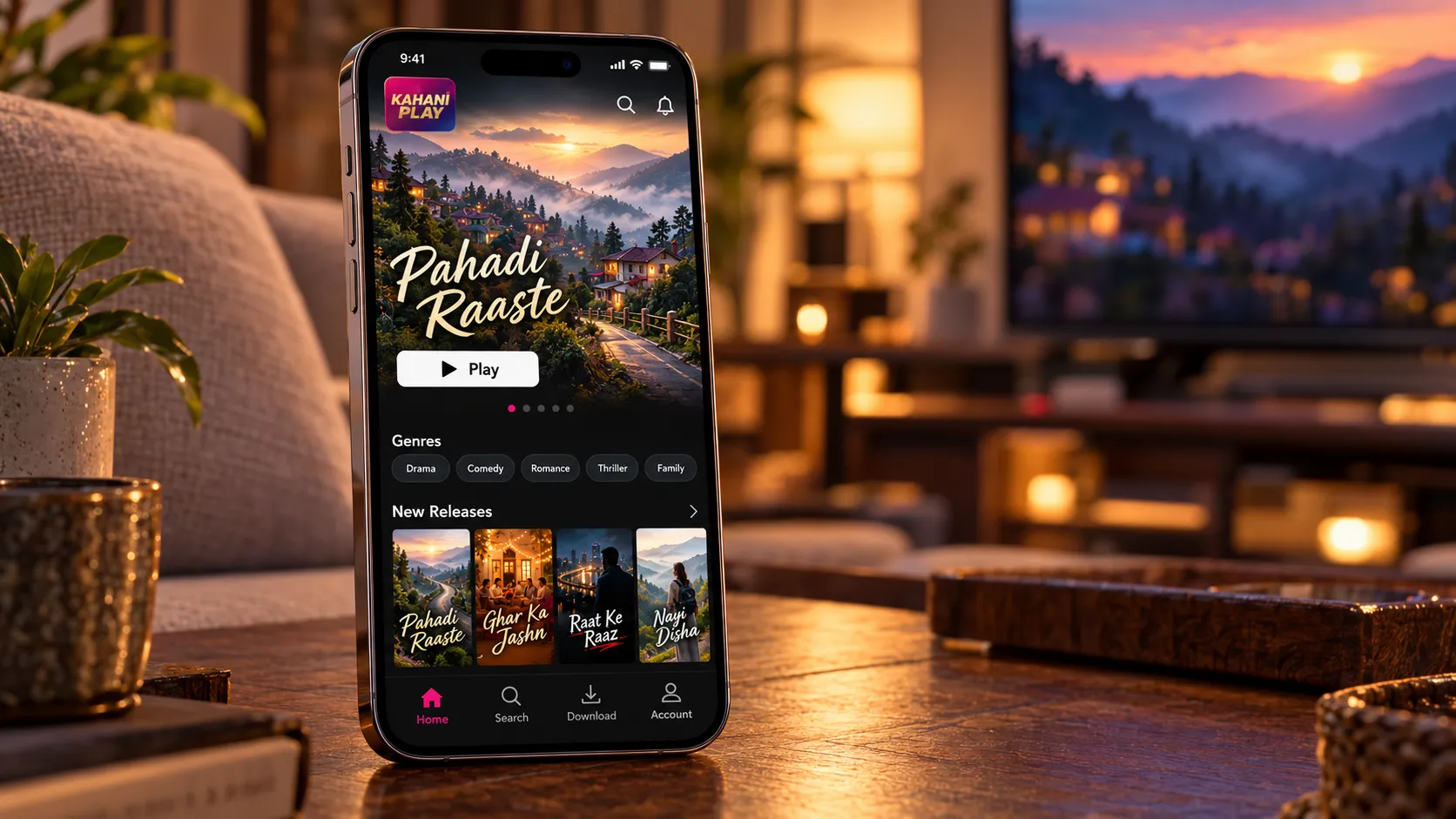
I've worked as an independent developer on apps like Kahani Play, which has passed 500,000 downloads, and I've also seen what agencies do well. This guide is my attempt at a fair comparison.
The short answer
If you need one app, built well, with a sensible budget and a clear first version, a good freelance app developer is usually the better deal. You talk to the person writing the code, decisions happen fast and you're not paying for account managers and office space.
If you need several workstreams running at once, round-the-clock support, or the paperwork that large enterprises demand, an agency is often the safer choice. You're paying for capacity and process, and sometimes that's exactly what the project needs.
The real question isn't freelancer or agency. It's who will actually write your code, and what happens if that person disappears. Ask both of those before you sign anything.
Freelancer vs agency: side-by-side comparison
These are generalisations, and there are great agencies and terrible freelancers. But this is the pattern I see most often when clients come to me after trying one or the other.
| Factor | Freelance / independent developer | App development agency |
|---|---|---|
| Cost | Lower. You pay for the developer's time, not sales, management and overheads. | Higher, often 2–4x for the same scope, because the rate covers a whole company. |
| Who writes the code | The person you hired. You can check their past apps and talk to them directly. | Often not the people in the sales call. Ask who is actually assigned and how senior they are. |
| Communication | Direct. You message the developer and get an answer from the person who knows the code. | Through a project manager. Clearer structure, but answers can be slower and second-hand. |
| Speed | Fast decisions, but one person can only build so much per week. | Can run design, frontend and backend in parallel, which helps on large projects. |
| Accountability | Personal. Their name is on the work, and repeat clients and referrals are their whole business. | Contractual. A company stands behind the work, with formal processes for escalation. |
| Continuity (bus factor) | The weak spot. If the developer gets sick or quits, work stops unless you've planned for it. | Better. Someone else on the team can usually pick up the project. |
| Scale | Best for one product with a focused scope. | Better for big builds, multiple apps and enterprise rollouts. |
What it actually costs: INR and USD ranges
Prices vary a lot by scope, location and experience, so treat these as rough market ranges, not price lists. The gap between columns is the useful part.
| Project | Freelancer in India | Agency in India | Agency in US / UK |
|---|---|---|---|
| Simple app, a handful of screens | ₹60,000 – ₹2 lakh | ₹2 – 5 lakh | $15,000 – $40,000 |
| MVP with login, payments, backend | ₹1.5 – 5 lakh | ₹5 – 15 lakh | $40,000 – $100,000 |
| Larger product, several user types | ₹5 lakh and up | ₹15 lakh and up | Six figures |
For international clients, an experienced Indian freelancer usually lands well below a US or UK agency for the same app. My own projects start from ₹60,000 in India and $500 internationally, where $500 covers a small job like a fix or a single feature. Full apps cost more, and I send one fixed price after a call.
If you want the detail behind these numbers, I've broken it down in my guide to app development cost in India.
When a freelance app developer is the better choice
A senior independent developer is hard to beat when the project fits in one person's head. That covers far more projects than people assume. Most apps I build are one product, for one company, with a first version that takes 6 to 12 weeks.
- You're testing an idea. An MVP needs speed and good judgement about what to cut, not a big team. See how I approach MVP development.
- Your budget is real but limited. You want your money going into the app, not into an agency's margin.
- You want to talk to the builder. A quick question gets a quick answer, and nothing gets lost between you, a PM and a developer.
- You need design and code to match. When the same person designs and builds, you don't approve screens that can't be shipped on time.
- You want someone around after launch. Many freelancers stay on for years. I've shipped more than 70 releases of Kahani Play since launch.
When an agency is the better choice
If your project is better suited to an agency, I'd rather tell you that on the first call than three months in. An agency is probably the right call if any of these describe you.
- You need a big team, now. Several apps, a web platform and a backend, all due in the same quarter. One person can't run that many workstreams in parallel.
- You need 24/7 support. If downtime at 3am costs you real money, you want an on-call rotation, not one developer who sleeps.
- Enterprise compliance is part of the deal. Banks, insurers and large corporates often require vendor audits, certifications, specific insurance and formal SLAs that only a company can provide.
- Your procurement team only works with companies. Some organisations simply can't contract an individual.
- You want one vendor for everything. Branding, marketing site, app, ads. Some agencies do all of it, which saves you coordinating several people.
Even then, ask the agency the same questions you'd ask a freelancer: who exactly is on my project, how senior are they, and can I talk to them directly?
The hybrid model: a senior independent plus specialists
There's a middle option that works well and doesn't get talked about much. You hire one senior independent developer who owns the product end to end, and they bring in specialists for the pieces that need them.
In practice that might mean I design and build the app and the backend, while a security specialist reviews the payment flow, a copywriter does the store listing, or a second developer helps for a few weeks before a deadline. You still have one person accountable for the whole thing, and you only pay for extra hands when you need them.
This is also how a lot of startups grow out of the freelancer stage. The independent developer builds version one, then helps you hire and onboard your first in-house engineer, with documentation that makes the handover painless.
How to reduce the risk of hiring a freelancer
The honest downside of a freelancer is the bus factor. You can shrink that risk to almost nothing with a few rules, and any good freelancer will agree to all of them without fuss. If someone pushes back, that tells you something.
- Code lives in your GitHub from day one. Not the developer's account. If they vanish tomorrow, you still have everything up to yesterday.
- Weekly test builds on your phone. You see real progress every week, through TestFlight and Google Play testing, so problems can't hide for months.
- Store accounts in your name. Your Apple Developer and Google Play Console accounts, with the developer added as a team member.
- Documentation as you go. A README that explains how to run the project, where the keys live and how to release. Another developer should be able to pick it up in a day or two.
- Milestone payments. Pay in stages tied to things you can see working, not a large amount upfront for promises.
- An IP assignment clause. The contract should say the code and designs belong to your company once paid for. Read it before you sign.
- Check real, live apps. Download them. Look at the store listing, the reviews and the release history, not just a Dribbble shot.
With the code in your GitHub, weekly builds and decent documentation, losing a freelancer becomes an inconvenience rather than a disaster. That's the whole goal.
I go deeper on vetting in how to hire an app developer in India, including the questions I'd ask if I were the one hiring.
Questions to ask before you hire either
Whether you're talking to a freelancer or an agency, the same short list of questions sorts the good from the risky. I'd ask every one of these on the first call.
- Which live apps have you built, and what exactly did you do on them? Design, code, backend, release, or just one piece?
- Who will write the code, and can I speak to them? For an agency, get names. For a freelancer, ask whether they subcontract.
- How will I see progress? The answer you want is a test build on your phone every week or so, not a monthly status report.
- What happens after launch? Who fixes bugs, handles OS updates and adds features, and how is that priced?
- What does the price include, and what doesn't it? A fixed-scope proposal should list both, so there are no surprises in week eight.
Vague answers to any of these are a warning sign, from either side.
How I work with clients
I'm a solo developer in Mumbai building iOS, Android, Flutter and React Native apps for businesses in India, the US, the UK and Europe. Here's what that looks like in practice.
- You deal with me directly. From the first call to the store release. Same phone number on WhatsApp, no account manager in between.
- No juniors. I design and write the code myself. Nobody learns on your project.
- Fixed scope, one price. After a discovery call I send a fixed-scope proposal, so you know the price and what's included before we start.
- Weekly builds. A new test build on your phone most weeks.
- You own everything. Your repository, your store accounts, IP assigned to your company.
- I stick around. Most clients move to a monthly maintenance plan after launch, month to month, no lock-in.
You can read the full process, step by step. And if timing is your main worry, my guide on how long it takes to build an app covers realistic schedules. If your project sounds like a good fit for one senior developer, tell me about it and I'll be straight with you about whether it is.