Flutter lets me build your iOS and Android apps from one codebase, which usually means a faster launch and a smaller bill. Done well, your users won't be able to tell.
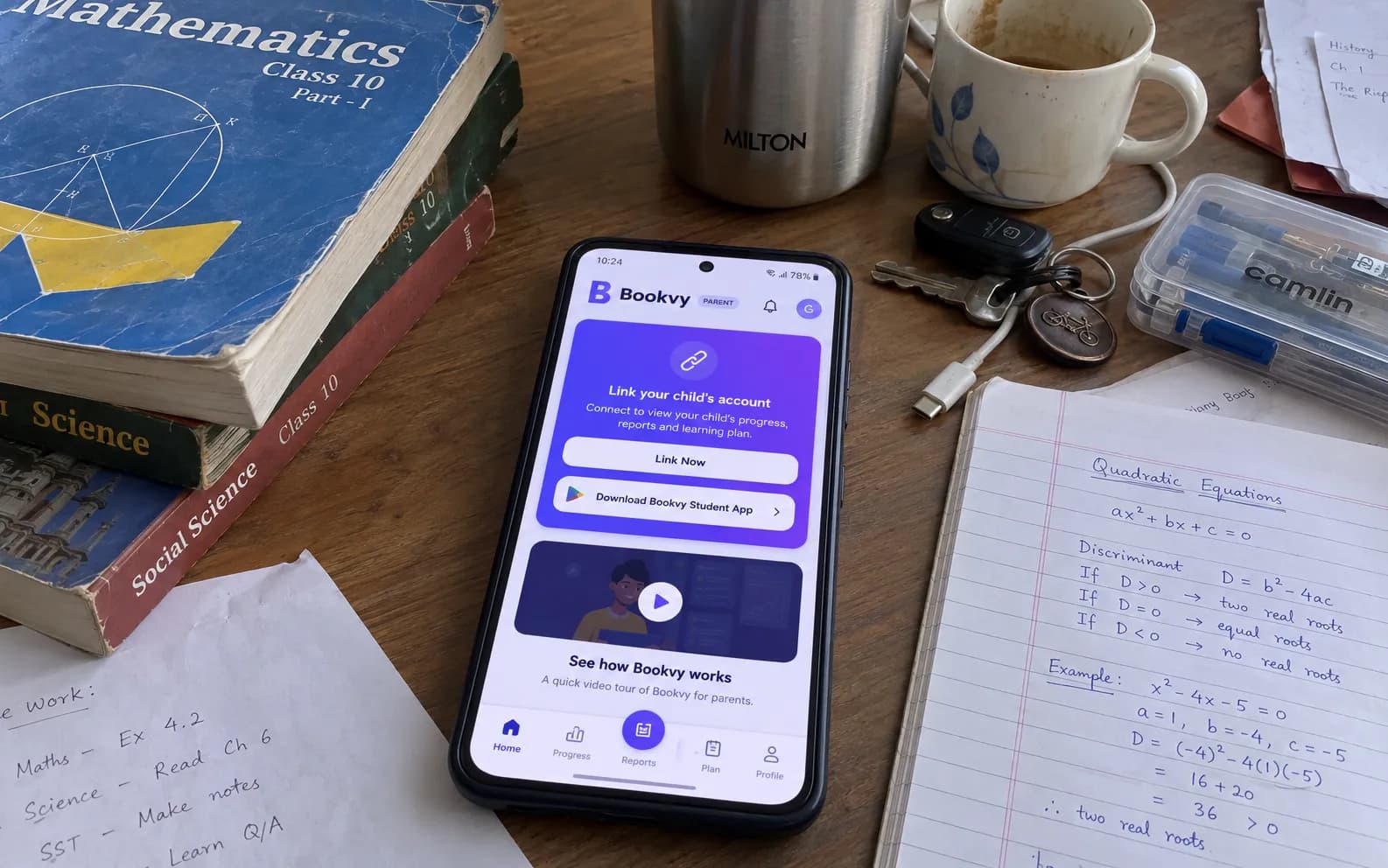
From the Bookvy case study
A good fit for
- Startups that need iOS and Android at launch without doubling the budget
- Apps with a strong custom design rather than stock components
- Products that may want a web or desktop version later
Tools I use
Flutter · Dart · Riverpod / Bloc · Firebase · Supabase · RevenueCat · Codemagic
Digital school · 2025
A digital school in your pocket: video lessons, notes, tests and an AI tutor for students, and a separate app that keeps parents in the loop.
- Client
- Bookvy Education
- Platforms
- Android · iOS
- Timeline
- First release in 12 weeks, ongoing since
- Year
- 2025
10,000+
Downloads on Google Play
2 apps
Student and parent, one backend
English + Hindi
Full app in both languages
Bookvy wanted to give school students in India a proper study companion on the phone they already carry: lessons, notes and practice tests in one place, in English or Hindi. Parents were the ones paying, so they also needed a simple way to see whether their child was actually studying and improving, without reading the student's app over their shoulder.
- 01
I split it into two Flutter apps sharing one NestJS + MongoDB backend: a student app built around daily study, and a lighter parent app built around a quick daily check.
- 02
The student app covers the whole loop: subjects and video lessons, a PDF notes library, quizzes and tests, then reports that point out weak topics, time spent and performance trends.
- 03
I added an AI tutor chat for doubts, plus streaks, XP, achievements and a leaderboard so studying every day feels worth it.
- 04
Parents link to their child by scanning a QR code or typing a short code, then get a daily summary, a 0–100 learning health score, strengths, focus areas and reports they can download.
- 05
Payments run through Razorpay and in-app purchase, with paid exam registration that includes an Aadhaar scan and a live photo check.
- 06
Every screen is translated into Hindi, and the app works on the low-cost Android phones most students use.
- Discovery
Sat with the Bookvy team to map how students study after school and what parents actually want to know each day.
- Design
Designed both apps in one system: indigo brand colour, Plus Jakarta Sans, large tap targets and clear progress visuals.
- Build
Flutter with Riverpod and go_router for both apps, a shared NestJS API, Firebase for notifications and analytics.
- Launch
Shipped to Google Play and the App Store with store listings, screenshots and the Hindi translation in place.
- After launch
Still shipping regular releases: new features, analytics-led fixes and support for every new Android version.
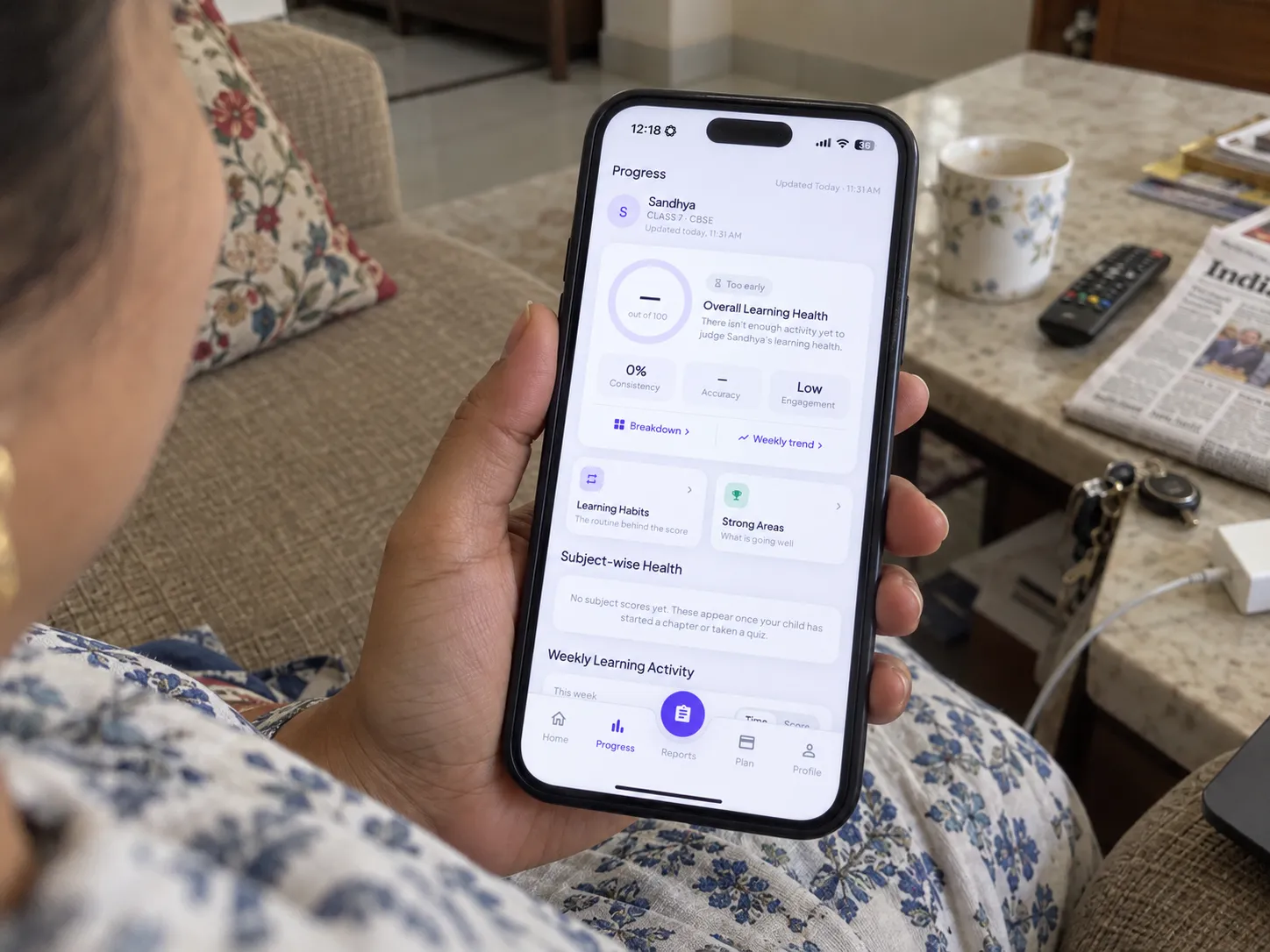
Bookvy Parent: a parent checking their child's subject-wise progress from the sofa
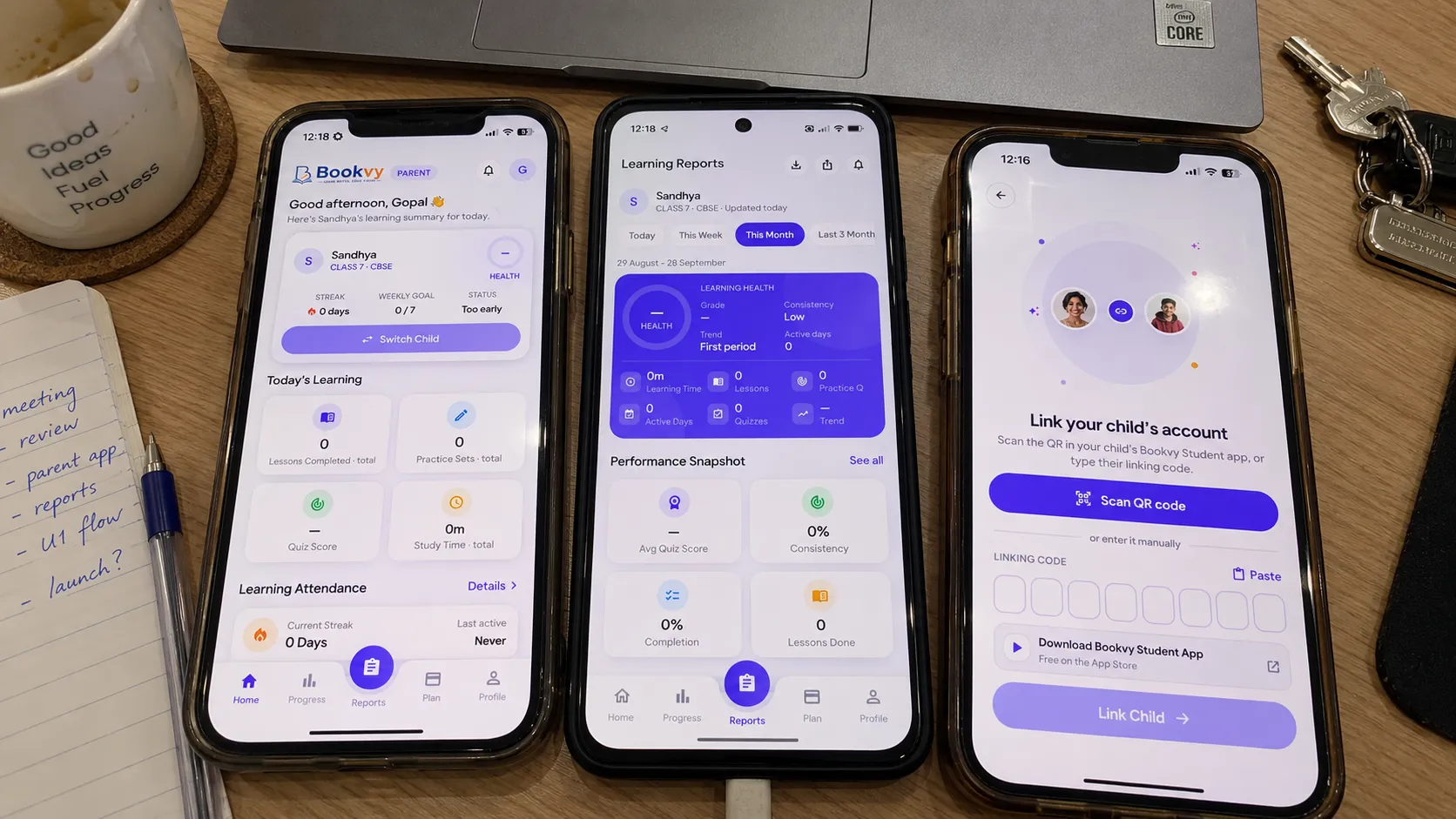
Bookvy Parent on three phones: daily summary, learning reports and linking a child by QR code
Bookvy Digital School has passed 10,000 downloads on Google Play and is live on the App Store, with the parent app giving families a reason to keep the subscription going. I still look after both apps and the backend.
Scope
Product design, Android app, iOS app, Parent app, Payments, AI tutor, Hindi localisation, Backend API
Stack
Flutter, Riverpod, NestJS, MongoDB, Firebase, Razorpay, In-app purchase
Video streaming · 2024
An Indian streaming app for movies, web series and short clips, with offline downloads and subscriptions. Half a million people have installed it.
- Client
- Kahani Play
- Platforms
- Android · iOS
- Timeline
- Launch, then 70+ releases
- Year
- 2024
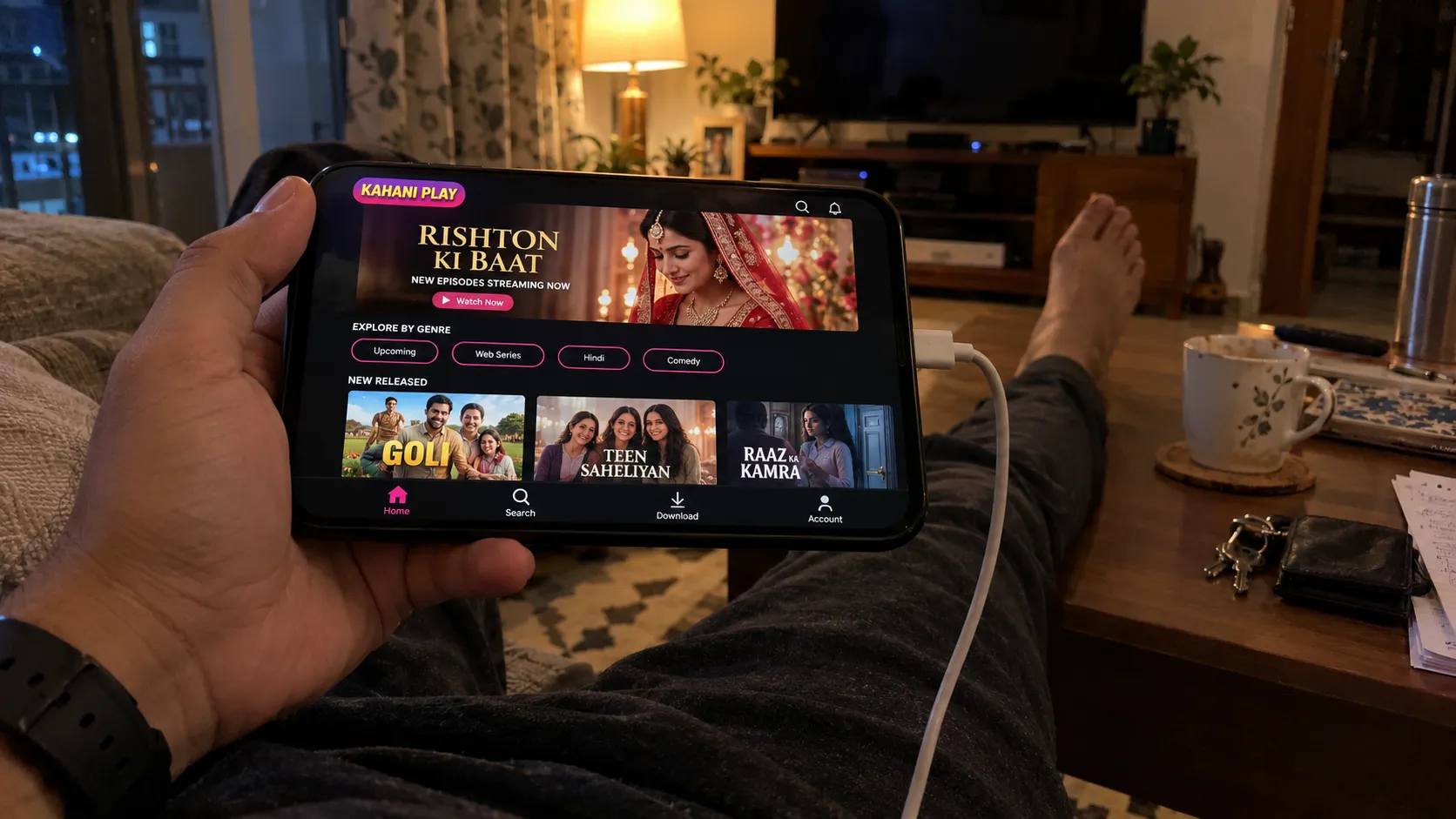
500,000+
Downloads on Google Play
70+
Releases shipped
1
Flutter codebase for Android and iPhone
Kahani Play needed a streaming app that holds up for a large Indian audience: smooth playback on cheap phones and patchy mobile data, offline viewing for people who download on Wi-Fi and watch later, and payments that work for everyone, whether they pay by UPI or card. It also had to reach iPhone users without doubling the work.
- 01
I built the app in Flutter, so one codebase runs on both Android and iPhone, with Riverpod for state and Dio for networking.
- 02
Playback streams adaptive HLS and picks the right quality for the phone and the connection, so video starts fast even on patchy mobile data.
- 03
Offline downloads are encrypted and kept in app-private storage, with a native Android layer for background downloads, so people can save episodes on Wi-Fi and watch later.
- 04
The catalogue covers movies, web series with seasons and a feed of short clips, with voice search, watch history and a wishlist.
- 05
Subscriptions run through UPI and Google Pay, SabPaisa and Cashfree on Android, and Apple in-app purchase on iPhone. Sign-in is by phone OTP.
- 06
Firebase handles push notifications, analytics and crash reporting, AppsFlyer and Branch handle attribution and deep links, and in-app updates and reviews are built in.
- 07
Behind it is a NestJS + MongoDB API with a Next.js admin panel for uploading and publishing content.
- Discovery
Mapped the content types, the payment methods the audience actually uses, and the devices and networks to design for.
- Design
A dark, poster-led interface where the content does the selling, with genre chips and rows that are quick to browse.
- Build
Flutter with Riverpod and Dio, adaptive HLS playback, encrypted offline downloads, and payments for both Android and iPhone.
- Launch
Released on Google Play, then tuned playback, start-up time and crash rates using real-world data.
- After launch
More than 70 releases since launch: new formats like short clips, new payment options, an iPhone build, and a rebuilt backend and admin panel.
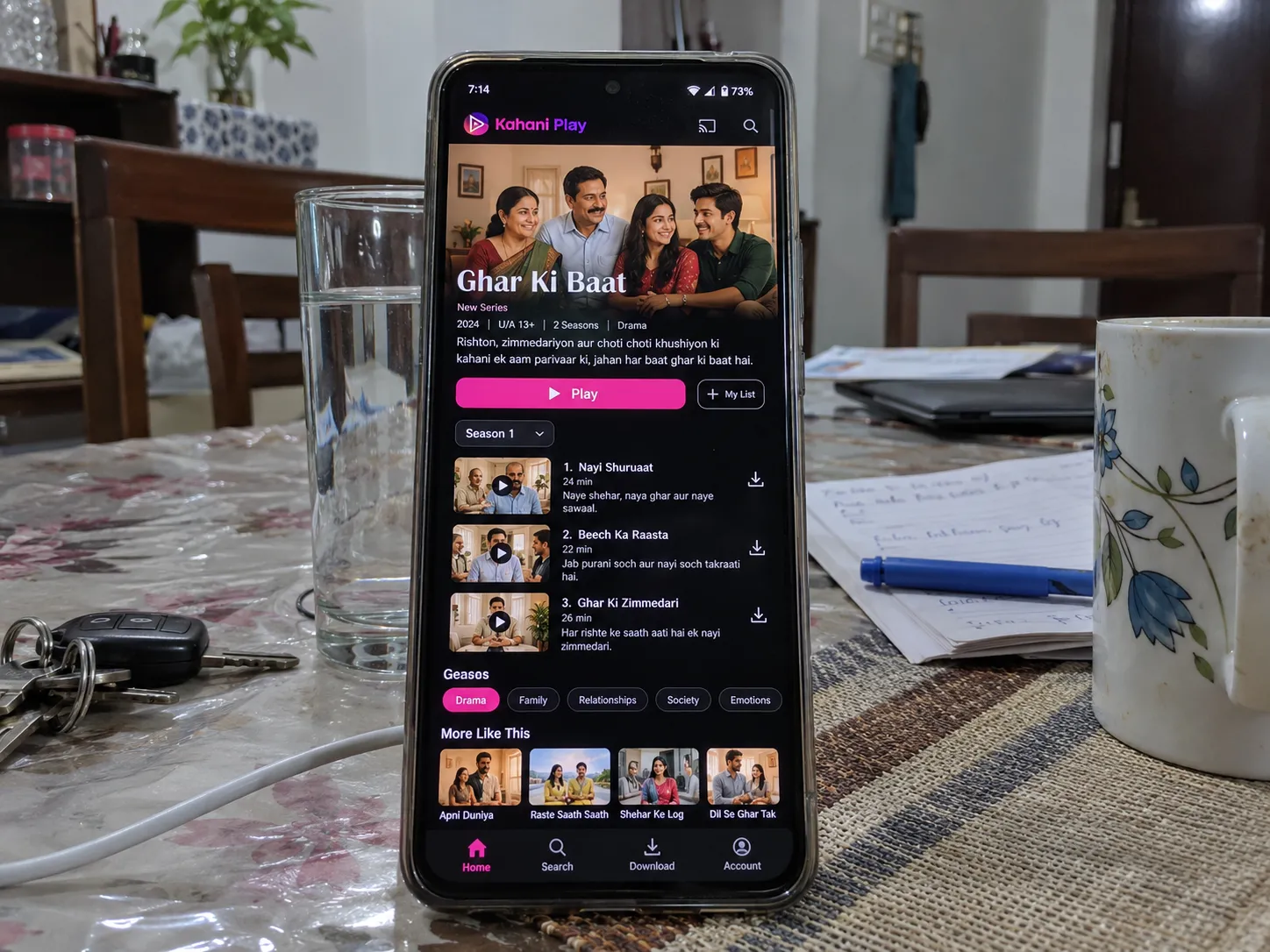
A Kahani Play series page with seasons and the episode list
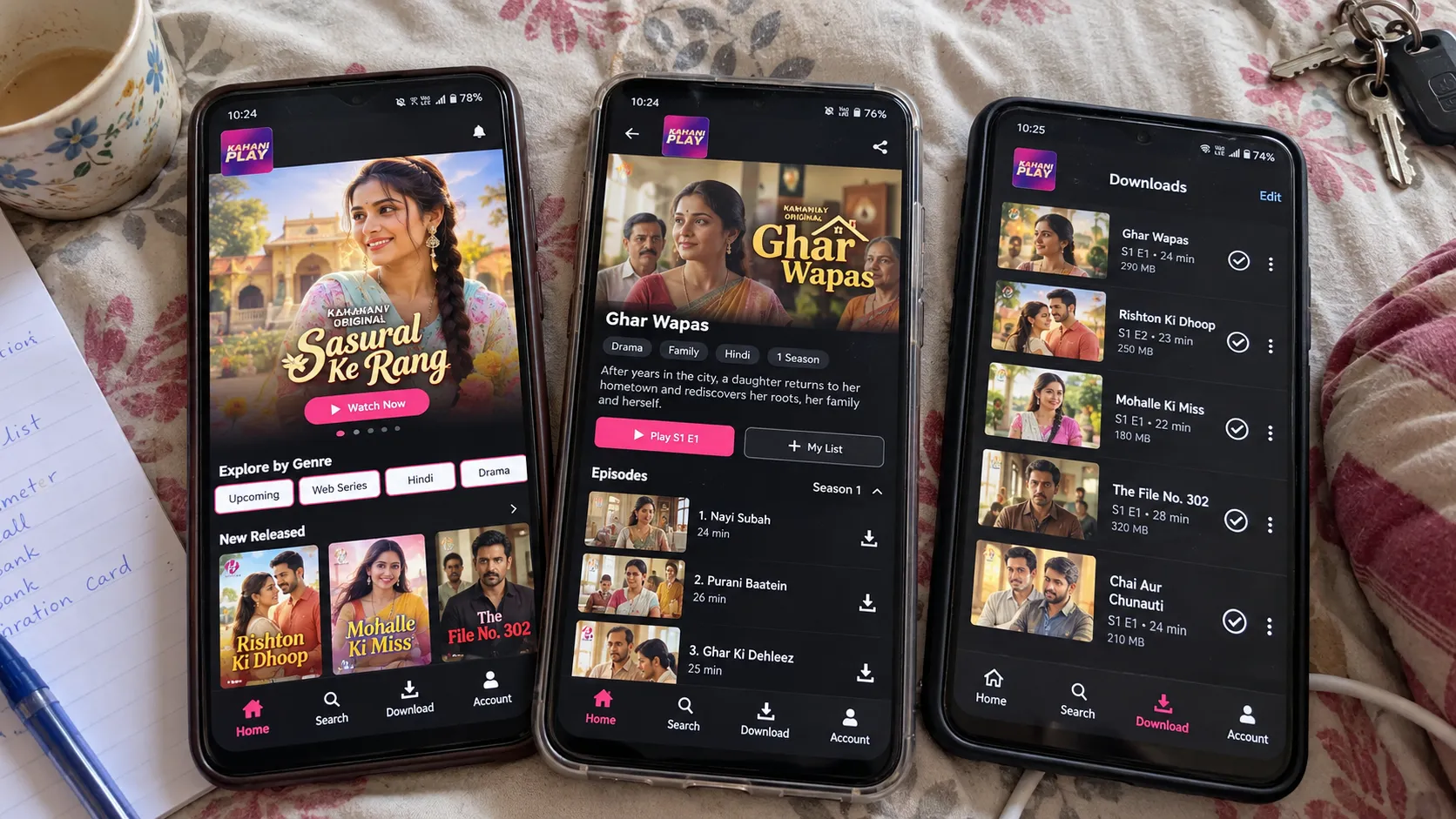
Kahani Play on three phones: home, a series with its episodes, and offline downloads
Kahani Play has crossed 500,000 downloads on Google Play. More than 70 releases on, it runs on one Flutter codebase for Android and iPhone, with a backend and admin panel that let the team publish content without needing a developer.
Scope
Android app, iOS app, Video streaming, Offline downloads, Subscriptions, Payments, Admin panel, Backend API
Stack
Flutter, Riverpod, Dio, HLS, Firebase, NestJS, MongoDB, Next.js
Have a project in mind? Tell me about it and I'll send you a price.
- Projects from $500
- 3+ years
- Reply within one business day
- Free, no obligation
Custom UI
Your design rendered the same on iPhone and Android, with platform-specific behavior where it matters.
Sensible state management
Riverpod or Bloc, set up so the app is still easy to change a year from now.
Native code when needed
Some features need Swift or Kotlin underneath. I write those bits too.
Subscriptions and payments
In-app purchases, RevenueCat and Stripe, tested properly including refunds and failed payments.
One release, both stores
App Store and Google Play releases go out together, built automatically on every change.
Web or desktop later
The same code can run an admin panel or a web version if you need one down the line.
- 01Week 1
Understand
We talk through the idea, who it's for and what a good result looks like.
- 02Weeks 2–3
Shape
Flows, wireframes and a clickable prototype, while changes are still cheap.
- 03Weeks 4–10
Build
Design and code in one-week cycles, with a new test build most weeks.
- 04Ongoing
Launch and after
Store release, monitoring and regular improvements once people start using it.
Yes. Google, BMW and Alibaba ship Flutter apps, along with thousands of startups. For most products, users can't tell it apart from native.
Both are good. I lean toward Flutter for design-heavy apps and React Native when your team already works in JavaScript or TypeScript. I'll recommend one after hearing about your product.
Projects start from $500, and a full app costs more depending on scope. Building once for both platforms is usually noticeably cheaper than two native apps. Tell me about your idea and I'll send a clear estimate.
Yes. It lives in your repository, follows standard Flutter conventions and comes with documentation.