I build web applications end to end: the interface, the API, the database and the admin side. SaaS products, customer portals, dashboards, CRMs and the internal tools a team uses every day.
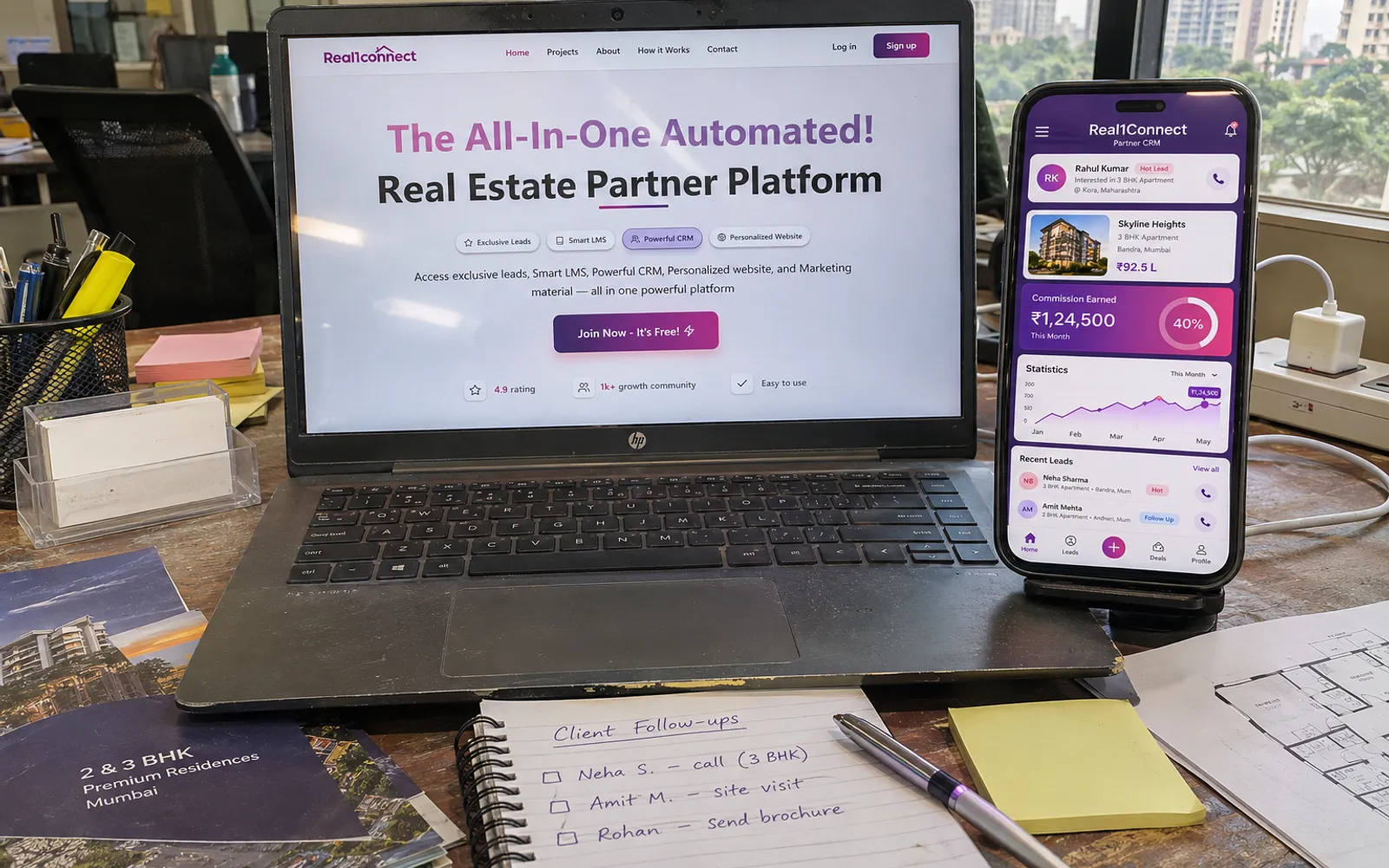
From the Real1Connect case study
A good fit for
- Founders building a SaaS product or B2B platform
- Businesses running on spreadsheets that need a CRM or internal tool
- Companies that need a portal for customers, partners or staff
Tools I use
Next.js · React · TypeScript · Node.js · NestJS · FastAPI · PostgreSQL · Redis
Real estate partner platform · 2025
One platform for real estate channel partners in India: leads, a CRM, a personal website, marketing material and commissions, run from a broker portal, a mobile app and an admin panel.
- Client
- Real1Connect (full-stack developer on the development team)
- Platforms
- Web · Android · iOS
- Timeline
- About nine months on the team, October 2025 to July 2026
- Year
- 2025
8
Backend services behind one platform
4
Apps: website, broker portal, admin panel, mobile app
186
Backend commits of mine, plus 75 on the front ends
Real estate channel partners in India juggle leads from ads and referrals, follow-ups across a team, marketing material from developers and commission payouts, usually in WhatsApp groups and spreadsheets. Real1Connect set out to put all of it in one subscription platform: exclusive leads, a CRM, a learning section, a personal website and commission tracking, with a six-step onboarding for new partners. I joined as a full-stack developer on the development team, and my work covered the parts where money, logins and content meet: subscriptions and invoices, referrals, OTP sign-in, notifications, the CMS behind the public site, and the admin and broker panels.
- 01
The platform runs on eight Node.js and Express services (identity and access, leads, properties, subscriptions and commissions, notifications, support and analytics, content and assets, and a common service), with PostgreSQL, MongoDB, Redis and S3 underneath. My commits touch most of them.
- 02
On subscriptions, I built fixed-term plans and their pricing, payment records, CGST, SGST and IGST on invoices, and a branded invoice PDF, and reworked the coupon and add-on APIs. Cancelling a plan now switches off the broker's configuration with it.
- 03
I built the referral credit and redeem flow and the referral report, then fixed the edge cases: no second credit when a broker is reactivated, one row per referral, and rows for deleted brokers hidden.
- 04
For sign-in I added email OTP and OTP login that works on the mobile app, resend OTP, and clearer errors, such as telling a deactivated team member why login failed.
- 05
I extended team management so a broker can act on leads assigned to their team members, with team stats, a team member dropdown and notifications when leads are assigned. On Meta ad leads I added bulk delete and fixed how phone numbers were split, with a backfill for existing records.
- 06
On the front ends I made the public site's content, footer, help centre contact details, legal pages and SEO fields editable from the CMS, and worked on the React admin panel: role-based permissions, read-only users, clickable dashboard stats and the subscription and referral screens.
- Discovery
Joined a platform already in development and learned the service layout, the branch flow and the client's list of changes, which came in as shared sheets of fixes.
- Design
Added to the existing website, broker portal and admin panel screens, such as the subscription cancel modal, the referral filters and a responsive login and broker panel.
- Build
Shipped features and fixes on my own branch and merged them into staging, mostly in the identity, subscription, lead and support services and the admin panel.
- Launch
The platform went live on the web, Google Play and the App Store, with the website showing the official store badges and real app links.
- After launch
Kept working through the client's fix sheets: payment records, invoice layout, referral reports, permissions for read-only admin users and SEO backfill for blog, news and help articles.
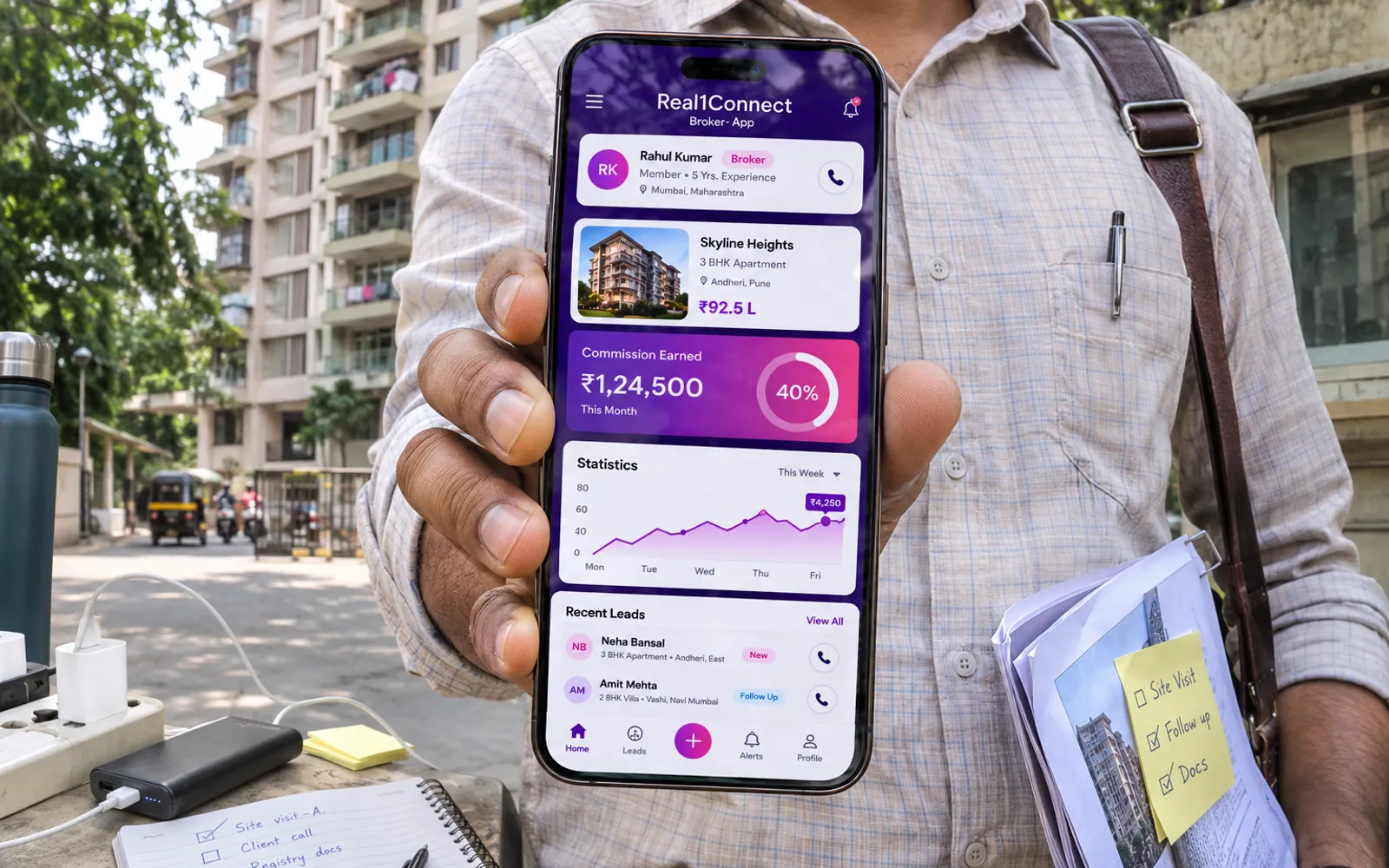
The Real1Connect broker app: leads, commissions and deal progress on the phone
Real1Connect is live at real1connect.com, on Google Play and on the App Store. My part of it, as one developer on the team, was 186 backend commits and 75 on the front ends, centred on subscriptions and invoices, referrals, OTP login, notifications and the CMS behind the public site.
Scope
Subscriptions and invoices, Referral credits and reports, OTP login, Team and lead management, Notifications, Website CMS and SEO, Admin panel, Broker portal
Stack
Node.js, Express, PostgreSQL, MongoDB, Redis, AWS S3, React, Next.js 15, React Native (Expo)
Daily astrology · 2026
The horoscope, but specific to you. One reading every morning: your energy score for the day, your best and riskiest hours, and how you vibe with your friends.
- Client
- Pulse (PULS-E)
- Platforms
- Android · iOS
- Timeline
- MVP in 10 weeks, ongoing since
- Year
- 2026
1,000+
Downloads on Google Play
28 seconds
To read the whole day
4 tabs
Home, Squad, Vibe and Me
Horoscope apps are everywhere, and most of them read the same for everyone born in the same month. Pulse wanted readings worked out from each person's actual birth chart, delivered as something you can check in under a minute with your morning chai, and a social side so people come back to compare notes with friends.
- 01
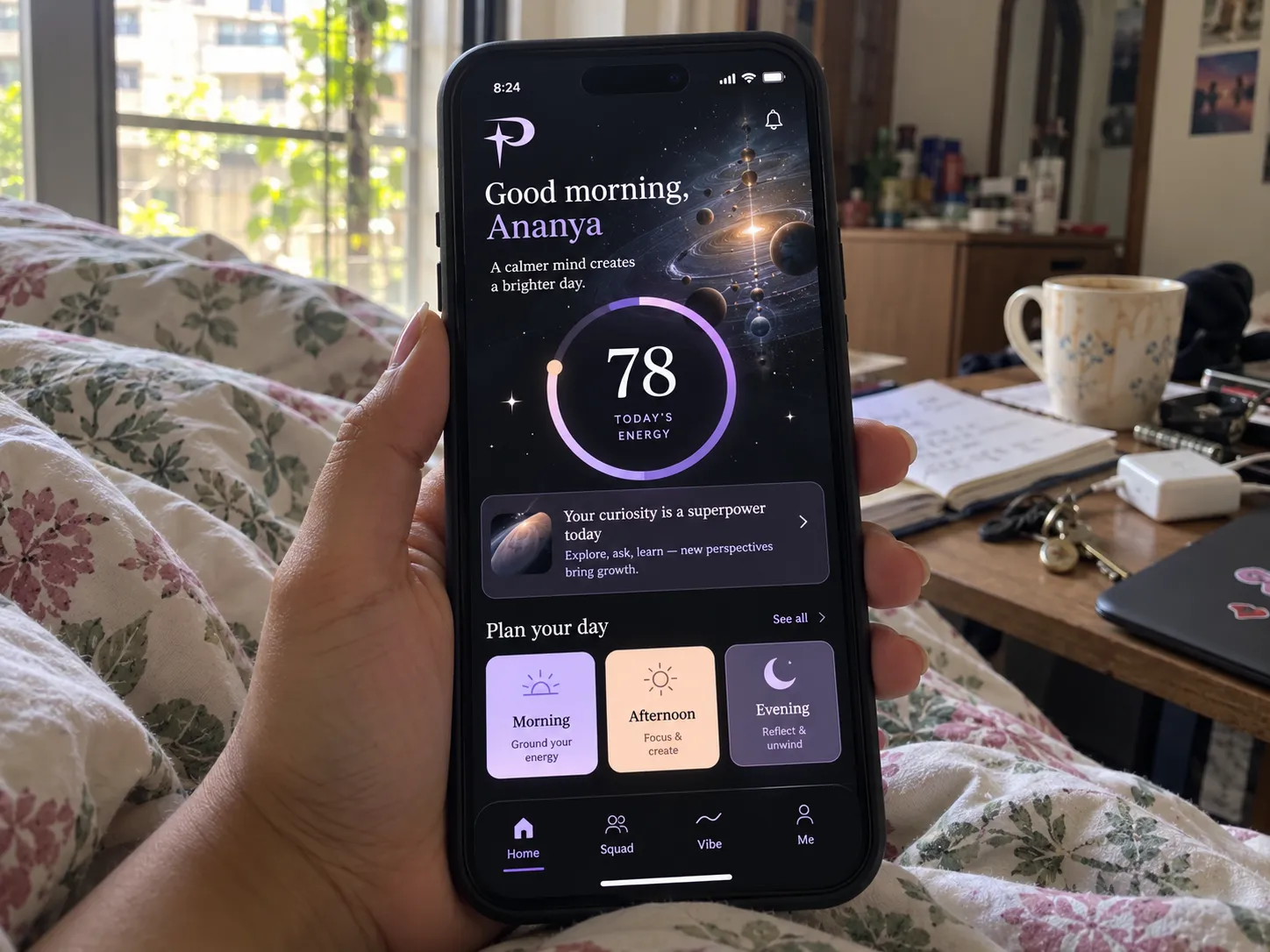
The Home screen answers one question: what's my energy today and what should I do with it? A 0–100 dial, a one-line headline, and the day split into morning, afternoon and evening windows.
- 02
Peak and risk windows show the best hours to focus and the ones to be careful with, and each block loads on its own so the screen is never stuck on a spinner.
- 03
Squad turns it social: add friends, form groups and chat in real time over WebSockets.
- 04
Vibe runs one-on-one and group compatibility checks, and Me holds the personality profile and archetype card.
- 05
The readings come from a Python backend: FastAPI with PostgreSQL, Redis and Celery for the daily jobs, Swiss Ephemeris for the astrology maths, and an AI layer that writes the readings in plain language.
- 06
Subscriptions run through Razorpay and in-app purchase, with push notifications for the morning reading.
- Discovery
Worked out with the founders what a reading should feel like: short, specific and personal, not a wall of text.
- Design
A dark, calm interface with soft pastel accents and a serif display face, so it feels closer to a journal than a fortune-teller.
- Build
React Native app with Expo, Expo Router, React Query and Zustand, a FastAPI backend with scheduled jobs, real-time chat and a React admin panel.
- Launch
Released on Google Play with a landing site, onboarding that collects birth details in under a minute, and push reminders.
- After launch
Iterating on retention: streaks, the daily personality card and new Squad features based on how people use it.
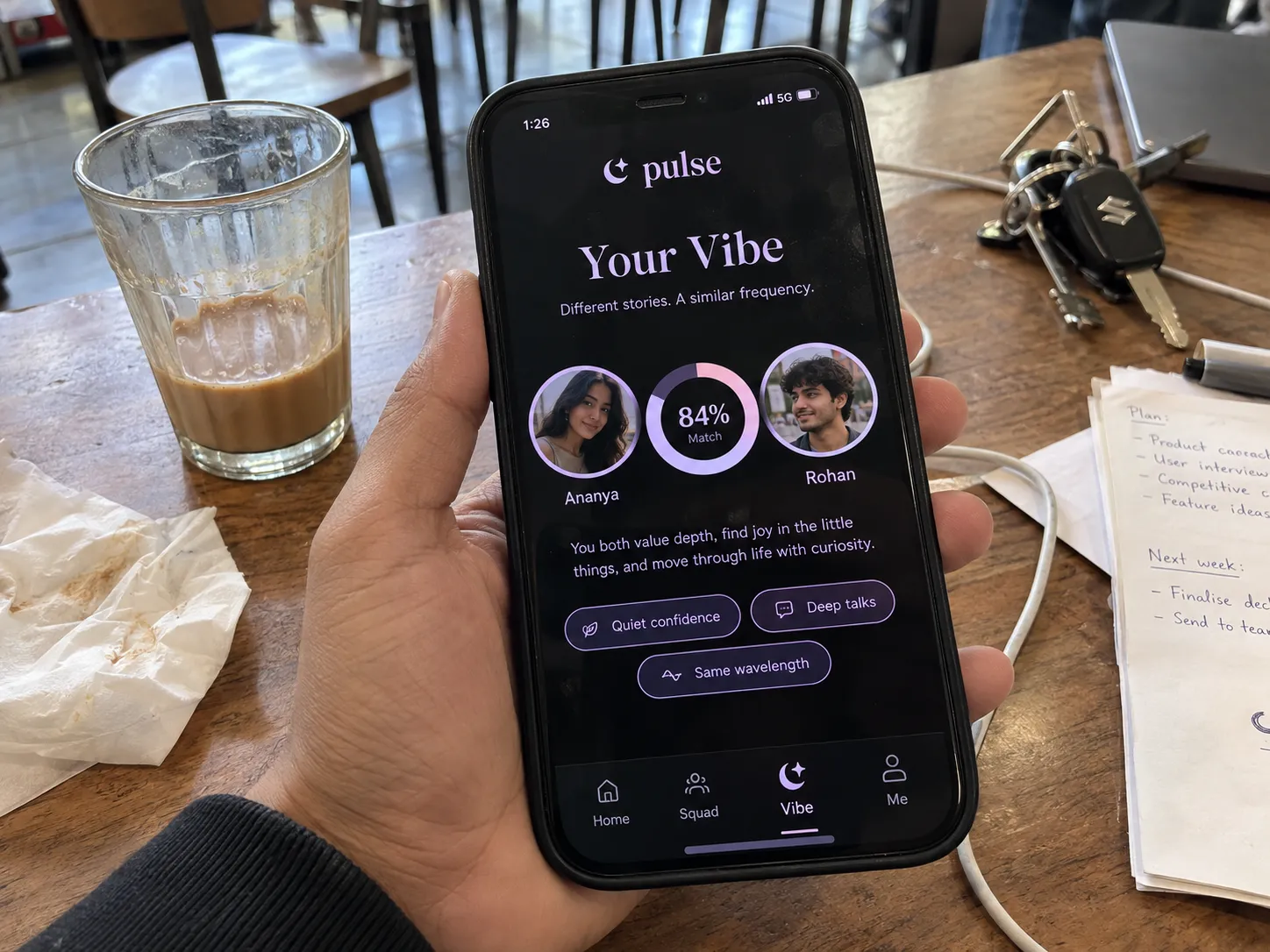
Vibe: an 84% compatibility check between two friends, over cutting chai
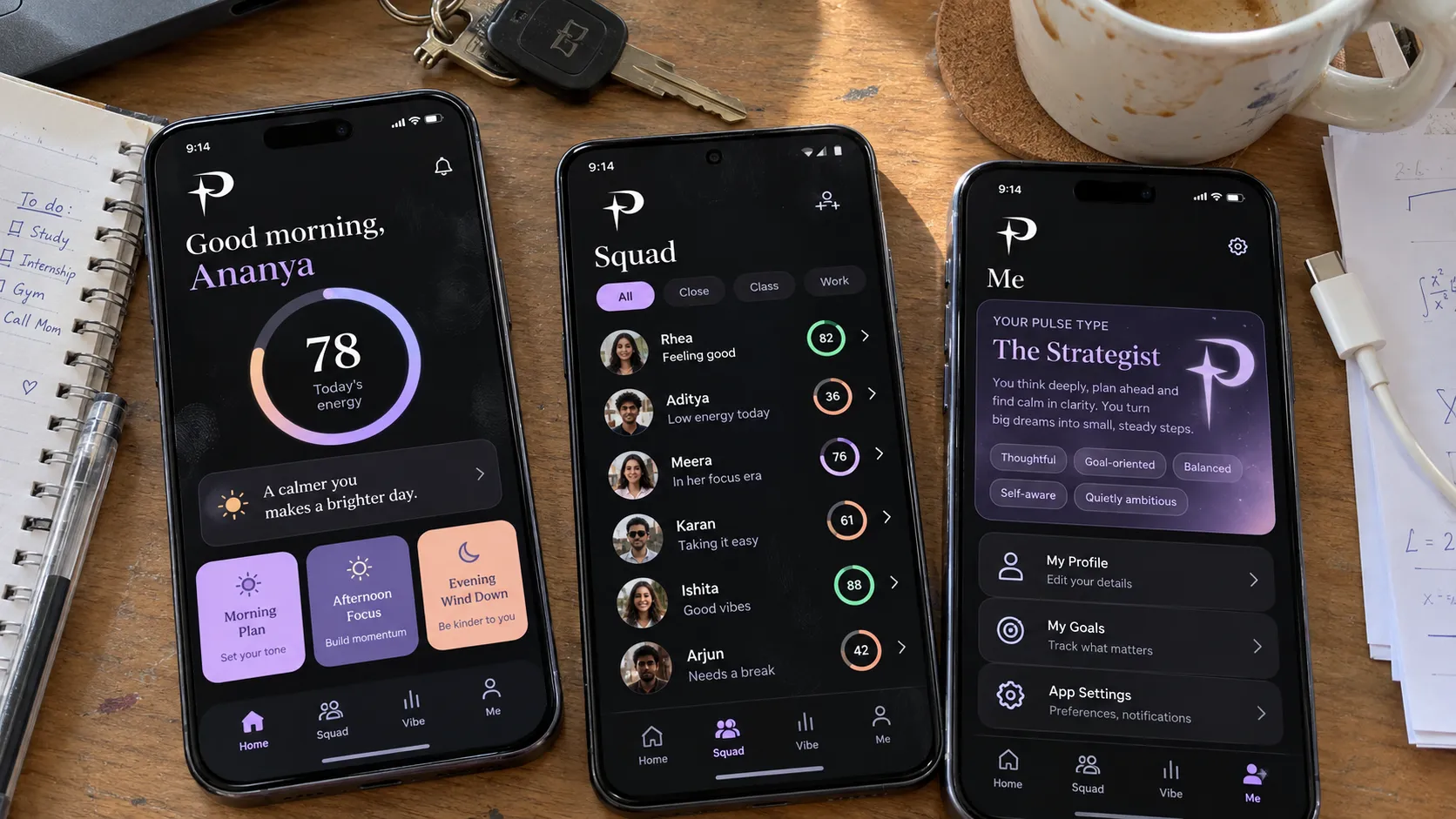
Pulse on three phones: home with the energy dial, the Squad tab and the personality card
Pulse is live on Google Play with over 1,000 downloads, and people open it the way it was meant to be used: a quick look every morning, then back to compare with friends.
Scope
Product design, Android app, iOS app, Real-time chat, Subscriptions, Backend API, Admin panel
Stack
React Native, Expo, FastAPI, PostgreSQL, Redis, Celery, WebSockets, Razorpay
Digital school · 2025
A digital school in your pocket: video lessons, notes, tests and an AI tutor for students, and a separate app that keeps parents in the loop.
- Client
- Bookvy Education
- Platforms
- Android · iOS
- Timeline
- First release in 12 weeks, ongoing since
- Year
- 2025
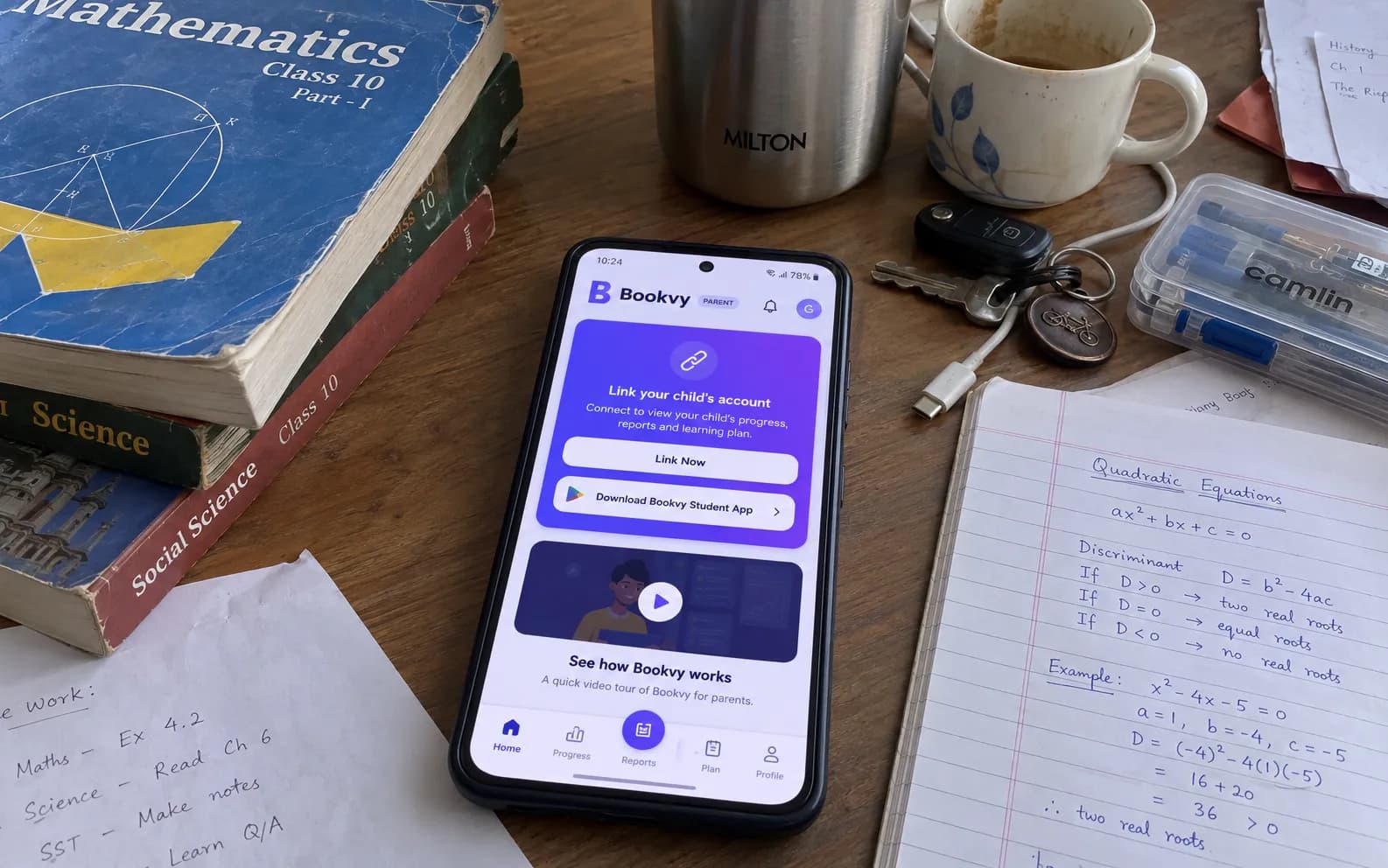
10,000+
Downloads on Google Play
2 apps
Student and parent, one backend
English + Hindi
Full app in both languages
Bookvy wanted to give school students in India a proper study companion on the phone they already carry: lessons, notes and practice tests in one place, in English or Hindi. Parents were the ones paying, so they also needed a simple way to see whether their child was actually studying and improving, without reading the student's app over their shoulder.
- 01
I split it into two Flutter apps sharing one NestJS + MongoDB backend: a student app built around daily study, and a lighter parent app built around a quick daily check.
- 02
The student app covers the whole loop: subjects and video lessons, a PDF notes library, quizzes and tests, then reports that point out weak topics, time spent and performance trends.
- 03
I added an AI tutor chat for doubts, plus streaks, XP, achievements and a leaderboard so studying every day feels worth it.
- 04
Parents link to their child by scanning a QR code or typing a short code, then get a daily summary, a 0–100 learning health score, strengths, focus areas and reports they can download.
- 05
Payments run through Razorpay and in-app purchase, with paid exam registration that includes an Aadhaar scan and a live photo check.
- 06
Every screen is translated into Hindi, and the app works on the low-cost Android phones most students use.
- Discovery
Sat with the Bookvy team to map how students study after school and what parents actually want to know each day.
- Design
Designed both apps in one system: indigo brand colour, Plus Jakarta Sans, large tap targets and clear progress visuals.
- Build
Flutter with Riverpod and go_router for both apps, a shared NestJS API, Firebase for notifications and analytics.
- Launch
Shipped to Google Play and the App Store with store listings, screenshots and the Hindi translation in place.
- After launch
Still shipping regular releases: new features, analytics-led fixes and support for every new Android version.
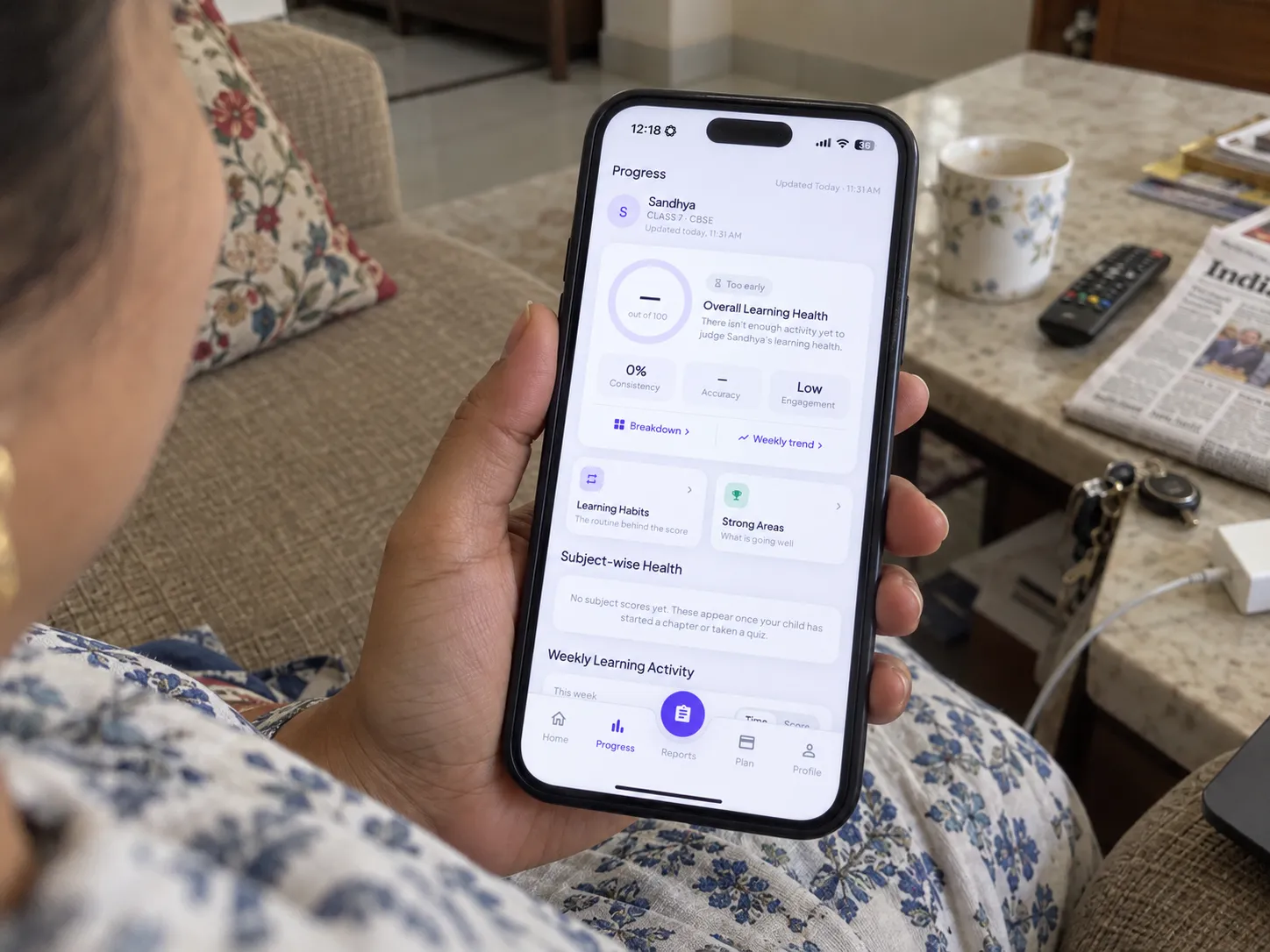
Bookvy Parent: a parent checking their child's subject-wise progress from the sofa
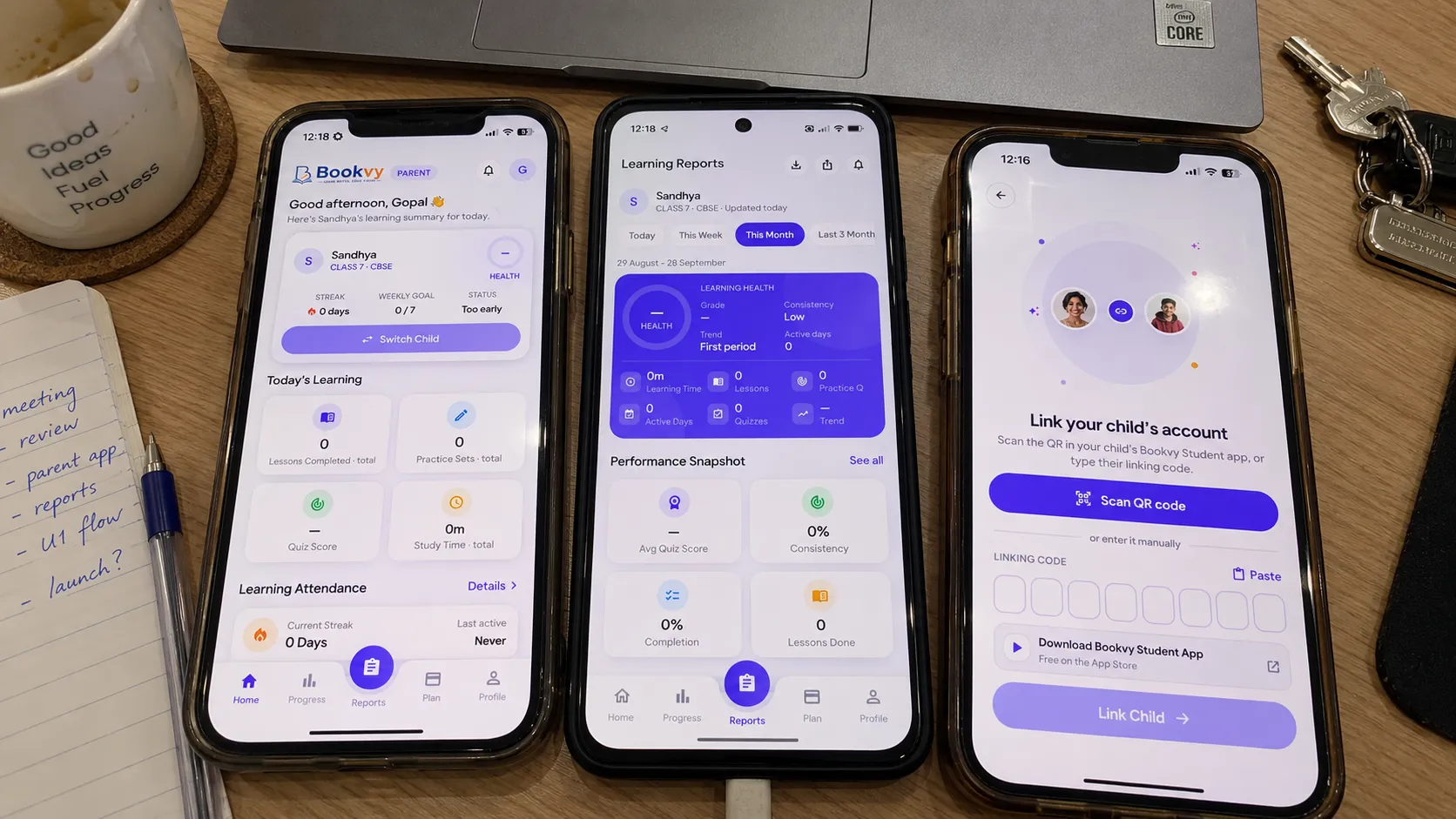
Bookvy Parent on three phones: daily summary, learning reports and linking a child by QR code
Bookvy Digital School has passed 10,000 downloads on Google Play and is live on the App Store, with the parent app giving families a reason to keep the subscription going. I still look after both apps and the backend.
Scope
Product design, Android app, iOS app, Parent app, Payments, AI tutor, Hindi localisation, Backend API
Stack
Flutter, Riverpod, NestJS, MongoDB, Firebase, Razorpay, In-app purchase
Have a web app in mind? Tell me about it and I'll send you a price.
- Projects from $500
- 3+ years
- Reply within one business day
- Free, no obligation
SaaS products
Sign-up, onboarding, plans and the core product itself, built so you can launch to paying customers.
Dashboards and portals
Customer portals, partner and broker portals and admin dashboards, each user seeing only what they should.
CRMs and internal tools
Lead tracking, approvals, reports and the spreadsheets your team has outgrown, turned into a proper tool.
Auth, roles and teams
Email and Google sign-in, organisations, invites and role-based permissions that hold up when the team grows.
Billing
Subscriptions, invoices and webhooks with Stripe for international customers or Razorpay for India, including failed payments and refunds.
AI features
Search, summaries, chat and document processing on top of your own data, where they actually save someone time.
Integrations and APIs
Connections to the tools you already use, plus a documented API so a mobile app or a partner can plug in later.
- 01Week 1
Understand
We talk through the idea, who it's for and what a good result looks like.
- 02Weeks 2–3
Shape
Flows, wireframes and a clickable prototype, while changes are still cheap.
- 03Weeks 4–10
Build
Design and code in one-week cycles, with a new test build most weeks.
- 04Ongoing
Launch and after
Store release, monitoring and regular improvements once people start using it.
Projects start from $500 for small pieces of work, and a full product depends on its scope. After a short call I send a fixed-scope proposal with one clear price.
Most first versions take 6 to 12 weeks. We agree on the smallest version that can win paying customers, launch that, then build from real usage.
Yes. The backend is a documented API, so an iOS, Android or React Native app can use the same accounts and data. I build those too.
You do. It lives in your repository and runs on your own hosting accounts from day one, with documentation so another developer can pick it up.