I design apps knowing I'll be the one building them, so every screen you approve can actually be shipped on time and on budget. You can hire me for design only, too.
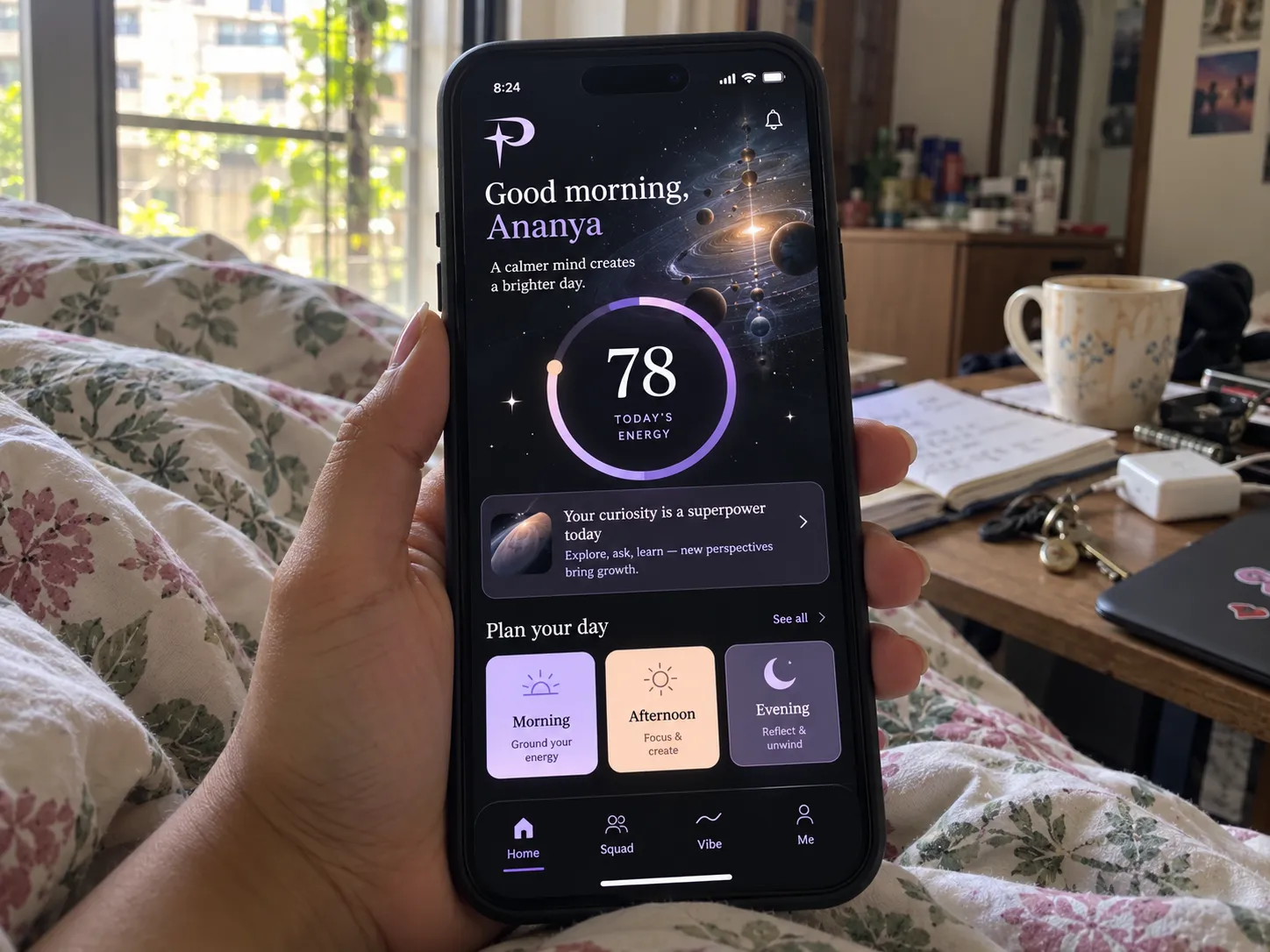
From the Pulse case study
A good fit for
- Founders who need a prototype before they raise or build
- Existing apps that feel dated or confuse people
- Teams with developers but no product designer
Tools I use
Figma · FigJam · Prototyping · Design tokens · Accessibility (WCAG)
Daily astrology · 2026
The horoscope, but specific to you. One reading every morning: your energy score for the day, your best and riskiest hours, and how you vibe with your friends.
- Client
- Pulse (PULS-E)
- Platforms
- Android · iOS
- Timeline
- MVP in 10 weeks, ongoing since
- Year
- 2026
1,000+
Downloads on Google Play
28 seconds
To read the whole day
4 tabs
Home, Squad, Vibe and Me
Horoscope apps are everywhere, and most of them read the same for everyone born in the same month. Pulse wanted readings worked out from each person's actual birth chart, delivered as something you can check in under a minute with your morning chai, and a social side so people come back to compare notes with friends.
- 01
The Home screen answers one question: what's my energy today and what should I do with it? A 0–100 dial, a one-line headline, and the day split into morning, afternoon and evening windows.
- 02
Peak and risk windows show the best hours to focus and the ones to be careful with, and each block loads on its own so the screen is never stuck on a spinner.
- 03
Squad turns it social: add friends, form groups and chat in real time over WebSockets.
- 04
Vibe runs one-on-one and group compatibility checks, and Me holds the personality profile and archetype card.
- 05
The readings come from a Python backend: FastAPI with PostgreSQL, Redis and Celery for the daily jobs, Swiss Ephemeris for the astrology maths, and an AI layer that writes the readings in plain language.
- 06
Subscriptions run through Razorpay and in-app purchase, with push notifications for the morning reading.
- Discovery
Worked out with the founders what a reading should feel like: short, specific and personal, not a wall of text.
- Design
A dark, calm interface with soft pastel accents and a serif display face, so it feels closer to a journal than a fortune-teller.
- Build
React Native app with Expo, Expo Router, React Query and Zustand, a FastAPI backend with scheduled jobs, real-time chat and a React admin panel.
- Launch
Released on Google Play with a landing site, onboarding that collects birth details in under a minute, and push reminders.
- After launch
Iterating on retention: streaks, the daily personality card and new Squad features based on how people use it.
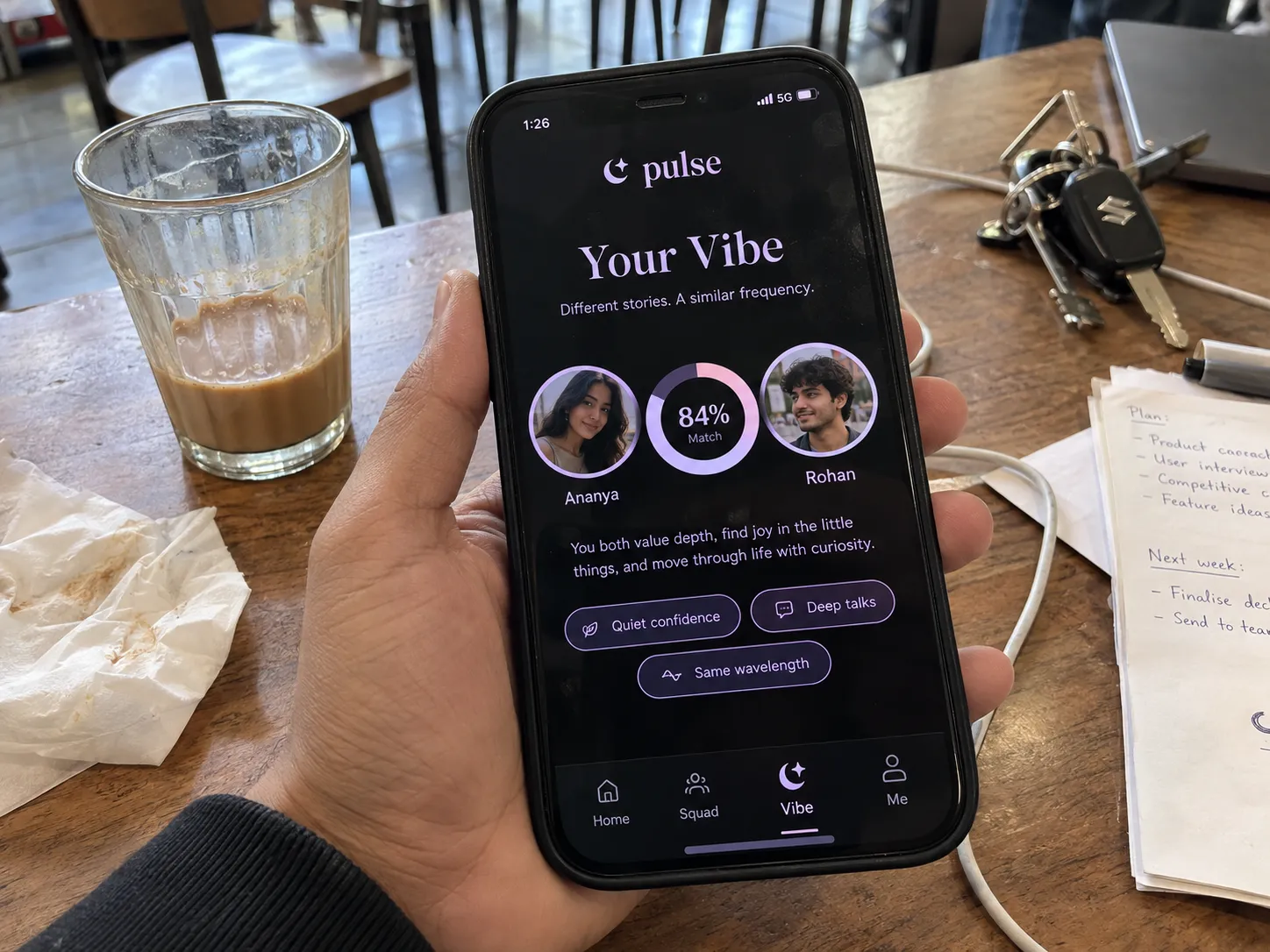
Vibe: an 84% compatibility check between two friends, over cutting chai
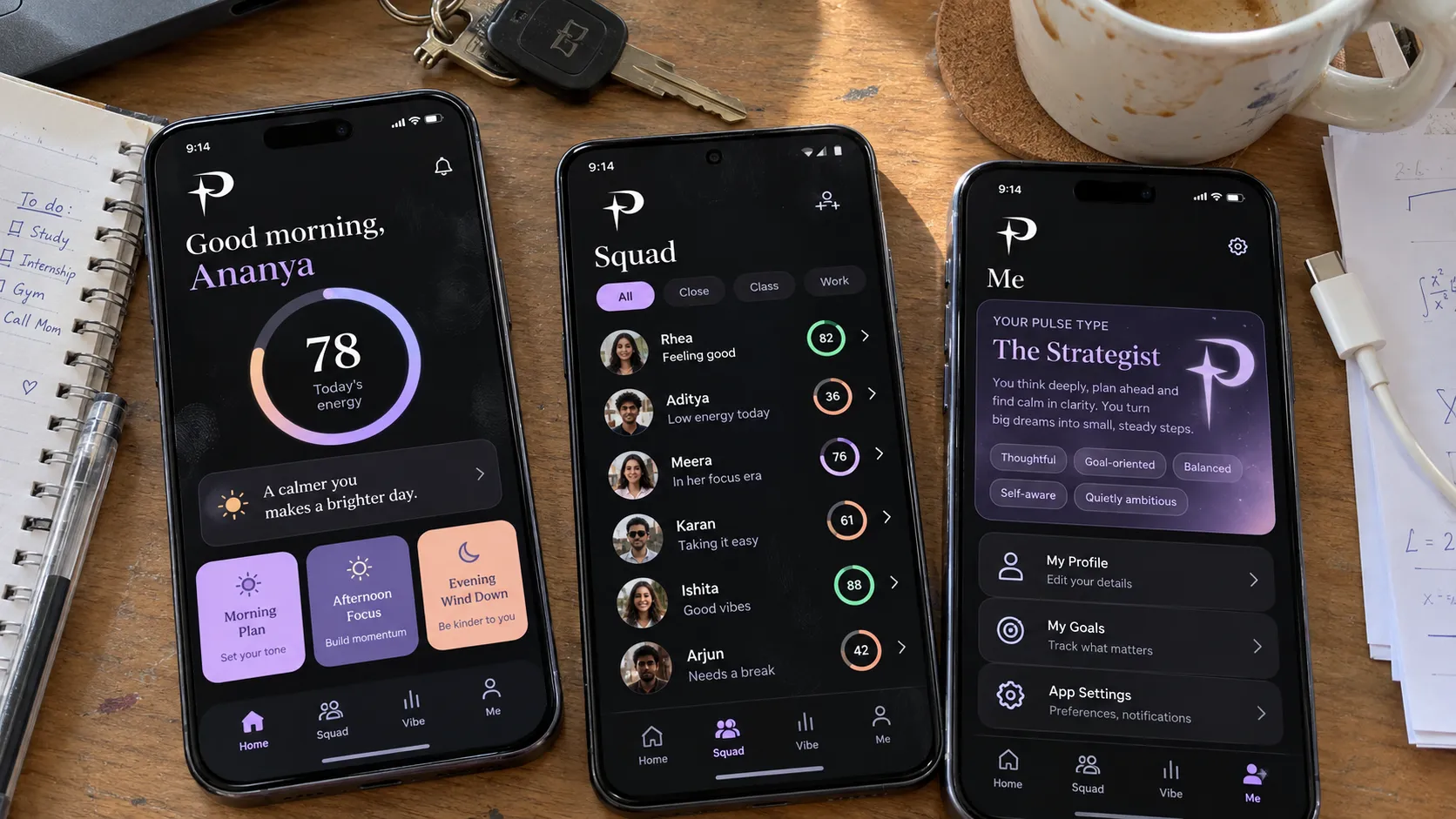
Pulse on three phones: home with the energy dial, the Squad tab and the personality card
Pulse is live on Google Play with over 1,000 downloads, and people open it the way it was meant to be used: a quick look every morning, then back to compare with friends.
Scope
Product design, Android app, iOS app, Real-time chat, Subscriptions, Backend API, Admin panel
Stack
React Native, Expo, FastAPI, PostgreSQL, Redis, Celery, WebSockets, Razorpay
Digital school · 2025
A digital school in your pocket: video lessons, notes, tests and an AI tutor for students, and a separate app that keeps parents in the loop.
- Client
- Bookvy Education
- Platforms
- Android · iOS
- Timeline
- First release in 12 weeks, ongoing since
- Year
- 2025
10,000+
Downloads on Google Play
2 apps
Student and parent, one backend
English + Hindi
Full app in both languages
Bookvy wanted to give school students in India a proper study companion on the phone they already carry: lessons, notes and practice tests in one place, in English or Hindi. Parents were the ones paying, so they also needed a simple way to see whether their child was actually studying and improving, without reading the student's app over their shoulder.
- 01
I split it into two Flutter apps sharing one NestJS + MongoDB backend: a student app built around daily study, and a lighter parent app built around a quick daily check.
- 02
The student app covers the whole loop: subjects and video lessons, a PDF notes library, quizzes and tests, then reports that point out weak topics, time spent and performance trends.
- 03
I added an AI tutor chat for doubts, plus streaks, XP, achievements and a leaderboard so studying every day feels worth it.
- 04
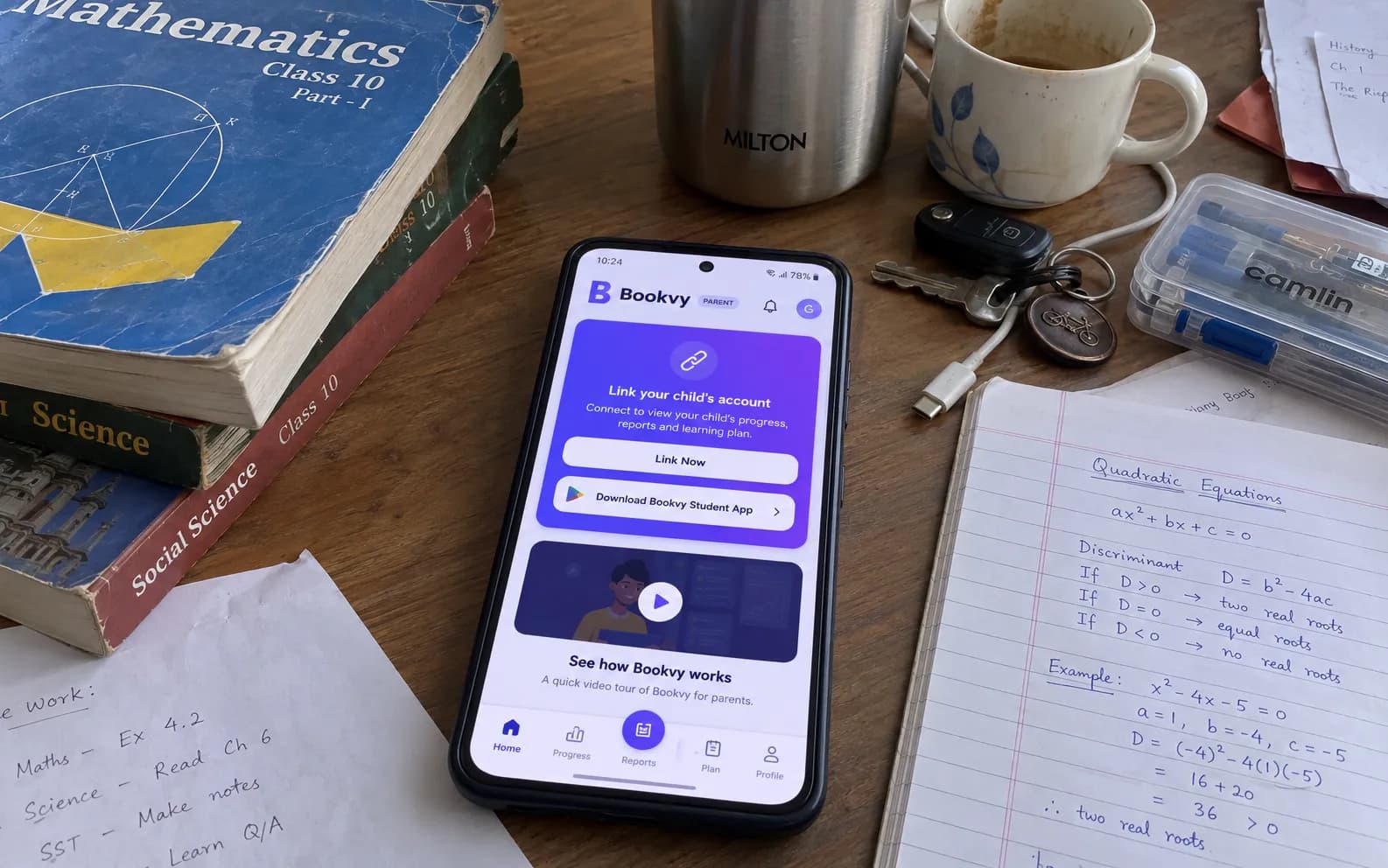
Parents link to their child by scanning a QR code or typing a short code, then get a daily summary, a 0–100 learning health score, strengths, focus areas and reports they can download.
- 05
Payments run through Razorpay and in-app purchase, with paid exam registration that includes an Aadhaar scan and a live photo check.
- 06
Every screen is translated into Hindi, and the app works on the low-cost Android phones most students use.
- Discovery
Sat with the Bookvy team to map how students study after school and what parents actually want to know each day.
- Design
Designed both apps in one system: indigo brand colour, Plus Jakarta Sans, large tap targets and clear progress visuals.
- Build
Flutter with Riverpod and go_router for both apps, a shared NestJS API, Firebase for notifications and analytics.
- Launch
Shipped to Google Play and the App Store with store listings, screenshots and the Hindi translation in place.
- After launch
Still shipping regular releases: new features, analytics-led fixes and support for every new Android version.
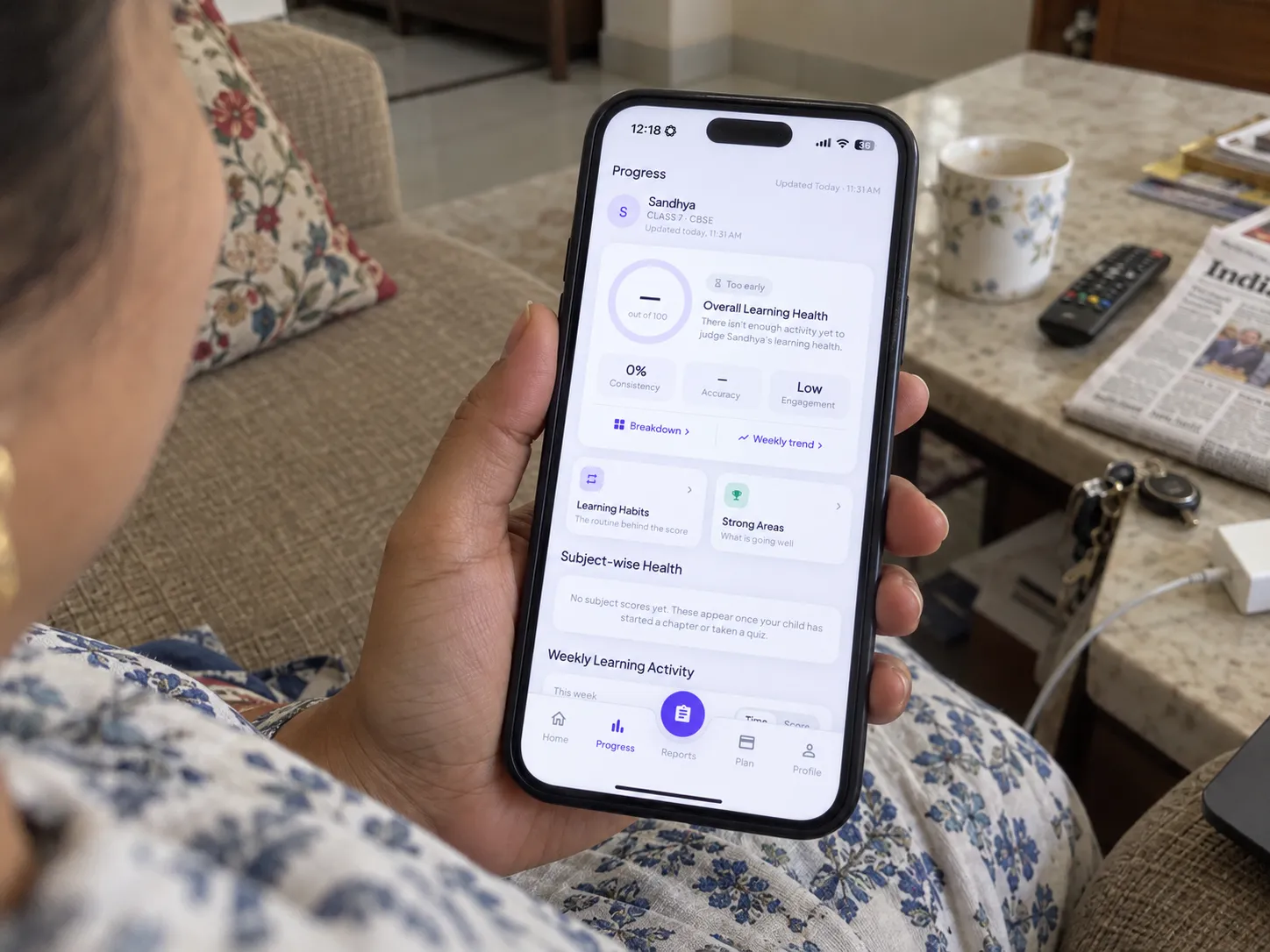
Bookvy Parent: a parent checking their child's subject-wise progress from the sofa
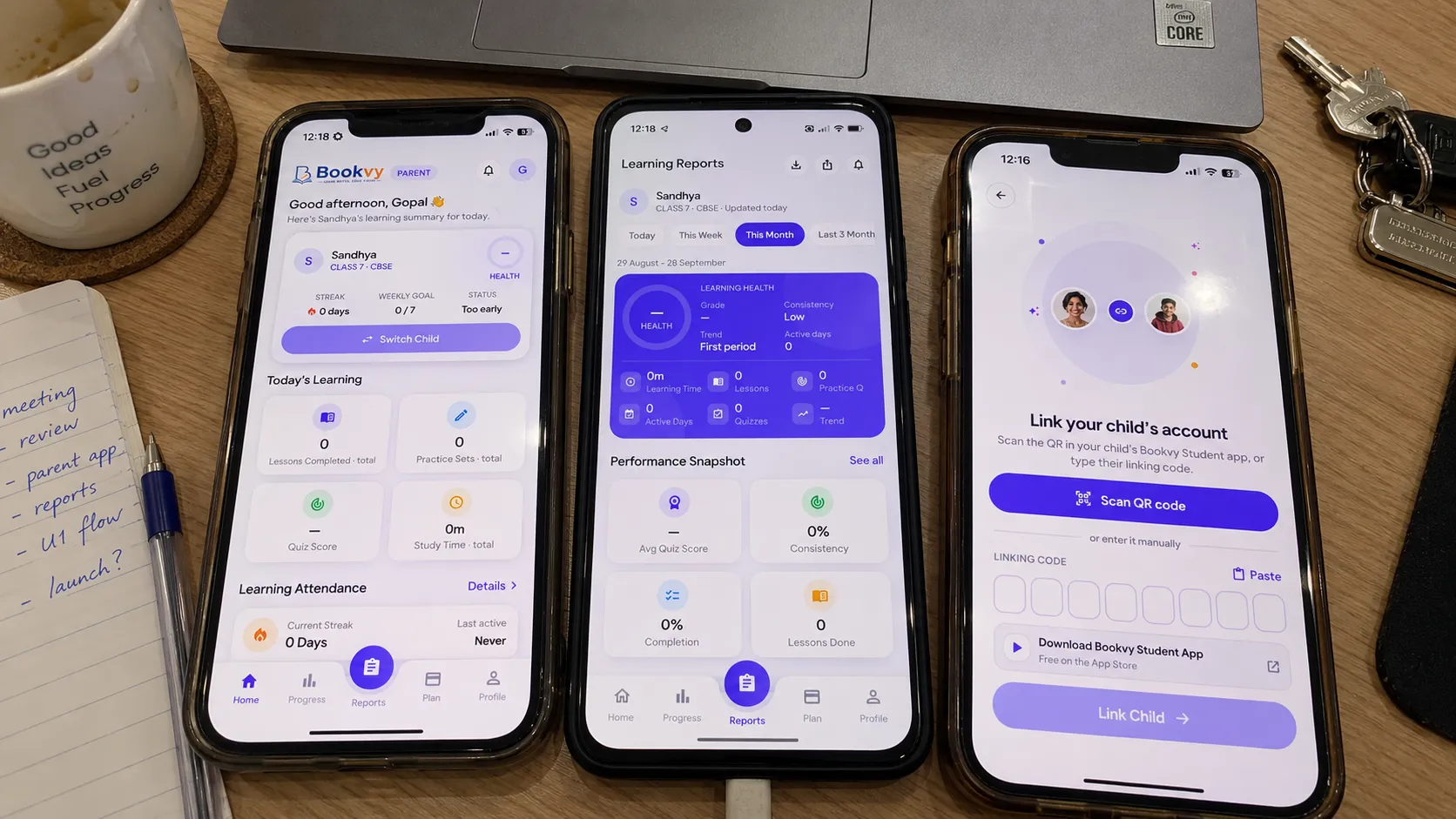
Bookvy Parent on three phones: daily summary, learning reports and linking a child by QR code
Bookvy Digital School has passed 10,000 downloads on Google Play and is live on the App Store, with the parent app giving families a reason to keep the subscription going. I still look after both apps and the backend.
Scope
Product design, Android app, iOS app, Parent app, Payments, AI tutor, Hindi localisation, Backend API
Stack
Flutter, Riverpod, NestJS, MongoDB, Firebase, Razorpay, In-app purchase
Have a project in mind? Tell me about it and I'll send you a price.
- Projects from $500
- 3+ years
- Reply within one business day
- Free, no obligation
Discovery
Who the app is for, what they need to get done and how we'll know it's working, written down.
Flows and wireframes
The structure of the app sorted out before anyone argues about colors.
Visual design
Typography, color, spacing and motion that fit your brand.
Clickable prototype
A Figma prototype you can test with users or show investors.
Design system
Reusable components so new screens stay consistent as the app grows.
Handoff
Specs your developers can build from. Or I just build it myself.
- 01Week 1
Understand
We talk through the idea, who it's for and what a good result looks like.
- 02Weeks 2–3
Shape
Flows, wireframes and a clickable prototype, while changes are still cheap.
- 03Weeks 4–10
Build
Design and code in one-week cycles, with a new test build most weeks.
- 04Ongoing
Launch and after
Store release, monitoring and regular improvements once people start using it.
Yes. You get a Figma file, a clickable prototype and a component library your developers can work from.
Usually 2 to 4 weeks for the main flows and key screens of a first version.
Yes. I start by looking at where people get stuck and what's worth keeping, then fix the parts that matter.
Yes. I design for both and adapt the places where the two platforms really do behave differently.