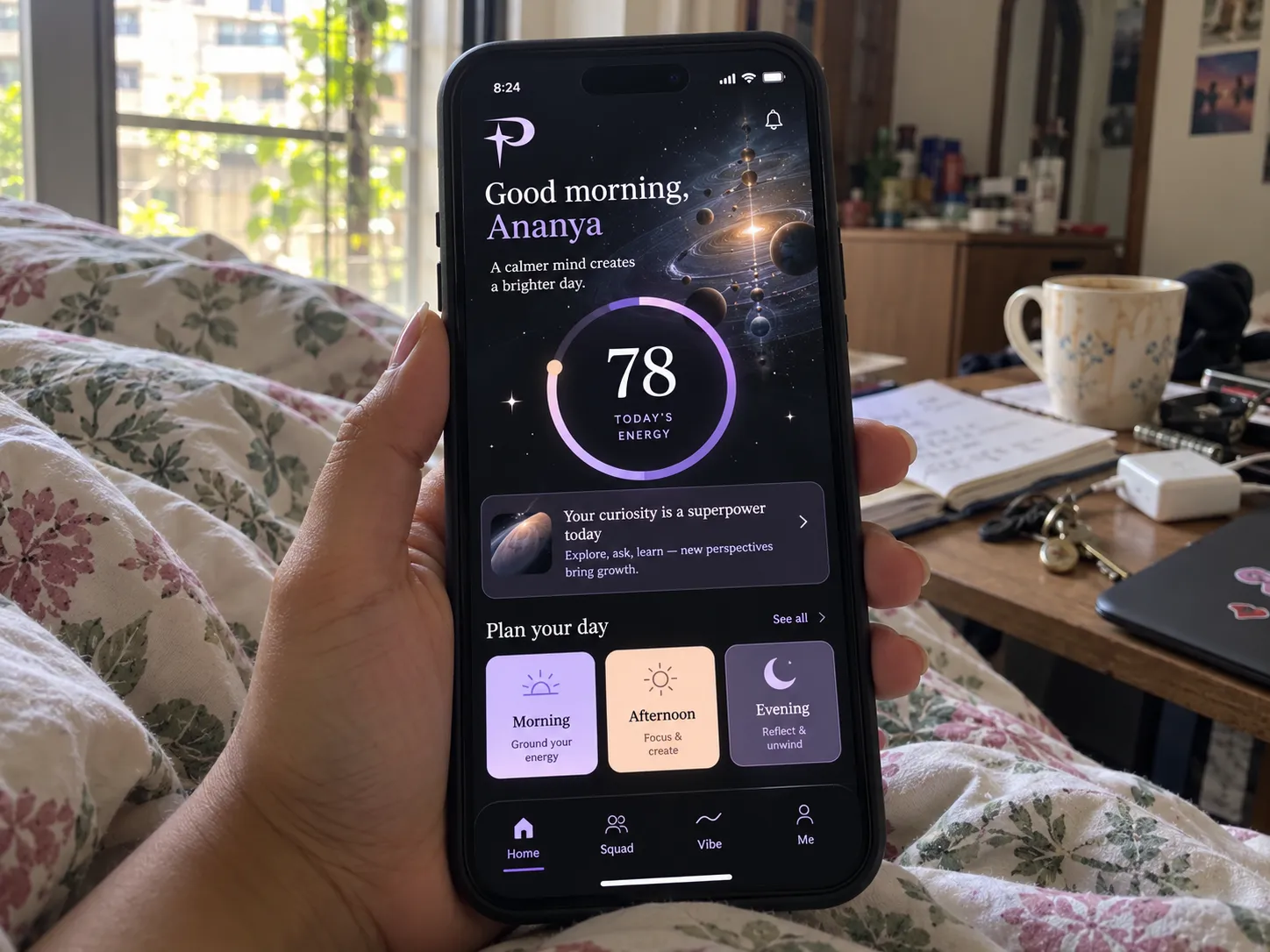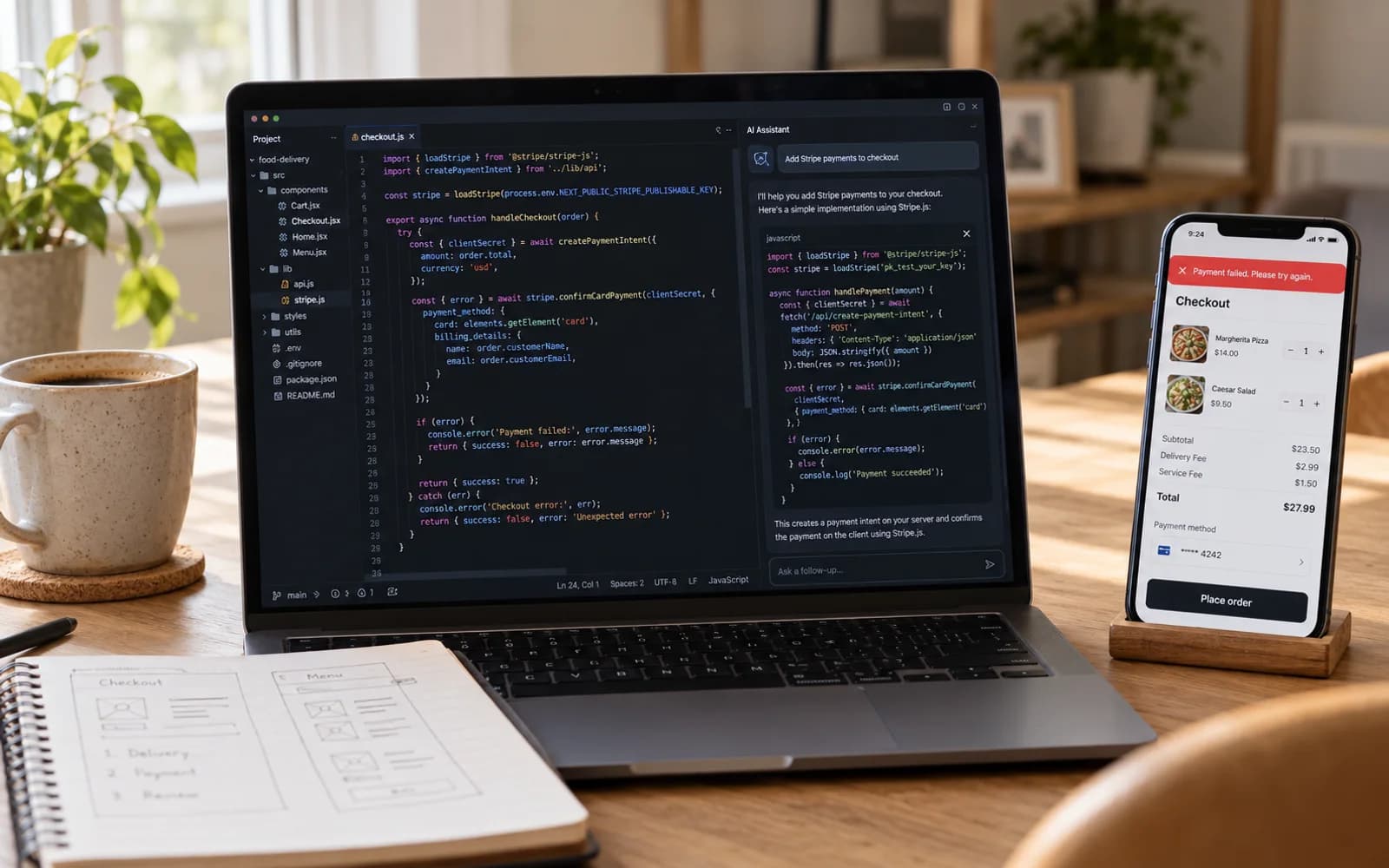
I'll start with a confession: I use AI coding tools every day. They write boilerplate, draft tests and catch bugs I'd have missed. So this isn't a developer telling you AI is a toy. It's a developer telling you where it stops being enough, because I see those apps land in my inbox every month.
'Vibe coding' means describing what you want in plain English and letting an AI tool write the app. In 2026 the tools are genuinely good. The question isn't whether you can build something. It's whether what you build can survive real users, real money and the App Store.
Where vibe coding works well
- Prototypes to test an idea. A clickable version to show investors, early users or your co-founder. Speed matters more than code quality here, and AI is brilliant at speed.
- Internal tools. A dashboard for your team, a form that writes to a spreadsheet, a simple tracker. Few users, low risk, no app store.
- Landing pages and simple websites. Mostly content and layout. Very hard to get badly wrong.
- Learning. If you're a founder who wants to understand how apps fit together, building one with AI is a great way in.
If nobody's money, health data or private messages go through it, and it doesn't need to be in the App Store, vibe coding is often the right call.
Where it breaks
These are the problems I see most when founders send me an AI-built app to 'just finish off'.
Security
This is the big one. API keys pasted into the app, databases left open to anyone who finds the URL, login checks done only on the phone and not on the server. The app works perfectly in a demo and leaks every user's data the day someone curious opens the network tab. Security researchers have been tracing a growing number of vulnerabilities back to AI-generated code this year, and it's not hard to see why.
Getting into the App Store
Apple rejects apps that feel like thin web wrappers, crash on review, lack account deletion, mishandle in-app purchases or don't explain why they need permissions. AI tools can build a screen, but they rarely know the review guidelines. Rejections are slow and frustrating if you don't know what the reviewer wants.
Payments and subscriptions
Apple and Google in-app purchases, Stripe, Razorpay, renewals, refunds, receipts and failed payments. The happy path is easy. The edge cases are where money goes missing, and AI-generated code usually only handles the happy path.
Change and scale
The first version comes together fast. The tenth change is where it slows down. Each new prompt patches the code a bit more, nobody has a clear picture of how it fits together, and fixing one thing breaks two others. Founders describe it as 'the AI keeps going in circles'. That's usually the point they call someone.
Cost: what you actually pay
| Route | Upfront cost | Your time | Best for |
|---|---|---|---|
| Vibe coding alone | $20 – $200 a month in tools | High: weeks of prompting, testing and fixing | Prototypes, internal tools, learning |
| Vibe coding, then a developer cleans up | Tools + $1,000 – $8,000 for a review and fixes | Medium | A prototype that's working and needs to go to real users |
| Senior independent developer | From $500 for small jobs; full apps typically $8,000 – $35,000 | Low: decisions and feedback | Apps with payments, accounts or store launch |
| Agency | $40,000+ in the US and UK | Low | Large scope, big teams, strict process |
The hidden cost of vibe coding is your time. A founder spending three months prompting instead of selling has spent a lot, just not in cash. And a rebuild after launch, when real users are on a shaky codebase, is the most expensive route of all. For a deeper look at what a professional build costs, see app development cost in the USA and UK or in India.
The middle path most founders should take
You don't have to pick one. What works best for most of my clients:
- Prototype with AI. Build the rough version yourself. Use it to decide what the app actually needs to do, and test it on ten real people.
- Bring in a developer for the real build. Show them the prototype. It's the best brief you'll ever write, and it cuts scoping time in half.
- Decide: clean up or rebuild. Sometimes the AI code is a fine base and needs hardening. Sometimes it's faster to rebuild the core properly and keep the designs. A good developer will tell you which, honestly.
- Keep using AI after launch. For copy, small UI tweaks and admin tools, it's great. Leave security, payments and the data model to someone who's accountable for them.
Signs it's time to bring in a developer
- You're about to take payments or store sensitive data.
- Apple or Google rejected the app and you don't know why.
- Each new feature breaks an old one.
- You have real users and you're scared to touch the code.
- An investor or customer asked about security and you didn't have an answer.
I fix and finish AI-built apps regularly. I start with a review of the code, the database and the security setup, then give you a straight answer on whether to harden it or rebuild parts of it. If that's where you are, send me what you have. And if you're still choosing who to work with, my guide on freelancers vs agencies might help.