Most education app ideas I hear about sound similar on the first call: video lessons, some tests, maybe an AI doubt solver, and a way for parents to see progress. The price range for that is wide, though, because 'some tests' can mean ten multiple-choice questions or a full exam engine with timed sections, negative marking and topic-wise reports.
I built and still maintain Bookvy, a Flutter K–12 learning app with video lessons, tests, an AI tutor and a separate parent app, now past 10,000 downloads. The numbers below come from that kind of work. If you want the general picture first, read my guide to app development cost in India.
Education app cost in India by tier
These ranges assume one Flutter codebase for Android and iOS, design included, built by an experienced freelancer or small studio, with a backend and admin panel. Agencies usually quote above the top of each range.
| Tier | What you get | Typical cost (INR) | Typical cost (USD) | Timeline |
|---|---|---|---|---|
| MVP | Student app with recorded video lessons, quizzes, PDF notes, OTP login, one paid plan, simple admin panel | ₹2 lakh – ₹4.5 lakh | $2,400 – $5,400 | 6–10 weeks |
| Full learning app | MVP plus a test engine with reports, an AI tutor, a parent app, streaks and leaderboards, two languages, Razorpay and in-app purchase | ₹4.5 lakh – ₹9 lakh | $5,400 – $11,000 | 3–5 months |
| Learning platform | Full app plus live classes, a teacher app or panel, several institutes or batches, a web app for students | ₹10 lakh – ₹25 lakh+ | $12,000 – $30,000+ | 5–9 months |
A coaching institute selling recorded courses to its own students usually fits the MVP tier. A product meant to compete for parents' money in a crowded market usually needs the full tier, because parents compare you with apps that already have tests, reports and a doubt solver.
Feature-by-feature cost of an edtech app
This is how I break down an education app when I quote it. Each line includes the app screens and the backend behind them.
| Feature | What it involves | Typical cost (INR) | Typical cost (USD) |
|---|---|---|---|
| Video lessons | Upload, HLS streaming, player with speed control, resume, progress tracking per lesson | ₹60,000 – ₹1.8 lakh | $700 – $2,200 |
| Tests and quizzes | Question bank, timers, sections, scoring, explanations, topic-wise results | ₹60,000 – ₹1.5 lakh | $700 – $1,800 |
| Notes library | PDF viewer, chapters, downloads for offline reading | ₹25,000 – ₹60,000 | $300 – $700 |
| Live classes | A video SDK for live sessions, scheduling, reminders, chat, recordings | ₹1 lakh – ₹3 lakh | $1,200 – $3,600 |
| AI tutor | Doubt-solving chat, answers in the student's language, limits per user, answers based on your syllabus | ₹1 lakh – ₹4 lakh | $1,200 – $4,800 |
| Parent app | Linking to a child, daily summary, progress reports, notifications | ₹1 lakh – ₹2.5 lakh | $1,200 – $3,000 |
| Payments | Razorpay with UPI and cards, Apple and Google in-app purchase, plans and coupons | ₹40,000 – ₹1.2 lakh | $500 – $1,500 |
| Admin and teacher panel | Upload content, build tests, manage students, plans and batches, see results | ₹80,000 – ₹2.5 lakh | $1,000 – $3,000 |
| Analytics and reports | Weak topics, time spent, performance trends, retention and conversion | ₹40,000 – ₹1.2 lakh | $500 – $1,500 |
| Gamification | Streaks, XP, achievements, leaderboard | ₹40,000 – ₹1 lakh | $500 – $1,200 |
The AI tutor has the widest range. A plain chat that sends questions to a model is quick to build. A tutor that answers from your own syllabus, stays on topic, refuses to just hand over homework answers and caps usage per student takes much longer. I go into how AI features are priced in AI app development cost.
Payments look simple but have a catch. If students buy access to digital lessons inside the iPhone app, Apple generally requires its own in-app purchase. That means Razorpay on Android or the web and Apple's system on iPhone, both feeding one subscription record. My notes on Razorpay subscriptions in Flutter cover the Android side.
Ongoing costs of running an education app
An education app is cheaper to run than a streaming app, but video and AI are both usage-based, so they grow with every active student.
- Video hosting and delivery. You pay to store each lesson in a few qualities and for every gigabyte students stream. A short lesson at phone quality is light, but a few thousand students watching an hour a day adds up to a real monthly bill. Offline downloads help, because a lesson downloaded once on Wi-Fi isn't streamed again. My guide on offline video downloads in Flutter explains how to protect those files.
- AI API usage. Every doubt a student asks costs a small amount, depending on the model and how long the question and answer are. The danger is the student who asks two hundred questions a day. Set a daily limit per student and check the AI cost per paying user against your subscription price.
- SMS and OTP. Each login OTP costs a few paise. Students reinstall apps and switch phones a lot, so OTP volume is often higher than you expect.
- Servers and database. A small learning app can run on ₹3,000 to ₹15,000 a month. Exam days, when everyone submits a test at once, are when you find out whether the backend was sized properly.
- Store and payment fees. Apple charges $99 a year and Google Play a one-time $25. Gateways take a cut of each payment, and Apple and Google take 15 to 30 percent of in-app purchases.
- Maintenance. Plan for 15 to 20 percent of the build cost each year, more if you publish a new syllabus every academic year. The app maintenance cost guide has the breakdown.
Compliance: children's data under the DPDP Act
If your users are school students, most of them are under 18, and India's Digital Personal Data Protection Act treats that as a child's data. In practice that means a few things you have to build, not just write into a privacy policy:
- Verifiable consent from a parent or guardian before you process a child's personal data.
- No tracking, behavioural monitoring or targeted advertising aimed at children.
- Collecting only the data the feature needs, and deleting it when it's no longer needed.
- A clear way for parents to see, correct and delete their child's data.
This affects cost because consent flows, deletion tools and careful analytics setup are real screens and backend work, typically a week or two on a full app. It's much cheaper to design in from the start than to retrofit. My guide to DPDP Act compliance for apps goes through what to build.
Be careful with ad SDKs and third-party analytics in a children's app. Many of them track by default, and that's exactly what the rules for children's data restrict.
How long it takes to build an edtech app
An MVP with video, quizzes, notes and payments typically takes 6 to 10 weeks. A full learning app with a parent app, AI tutor and reports is 3 to 5 months. Bookvy's first release took 12 weeks. Live classes and a teacher app add another one to three months. Content is often the slowest part: if your lessons and question banks aren't ready, the app waits. There's more on timelines in how long it takes to build an app.
Ways to keep the cost down
- Recorded lessons before live classes. Live classes need scheduling, a video SDK and a teacher who shows up on time. Recorded lessons with good tests usually prove the idea first.
- One subject or one grade first. Launch with the content you have, then expand. A tight MVP is cheaper and teaches you more.
- Rent video delivery and the AI model. A managed video service and an AI API cost less than building either yourself until you have real scale.
- Build the parent view later if parents aren't paying. If students or schools pay, a parent app can wait. If parents pay, it may be the feature that keeps them paying.
- Use Flutter for both platforms. Bookvy's student and parent apps are both Flutter, sharing one backend.
Lessons from building Bookvy
- Two apps, one backend. The student app is built around daily study. The parent app is lighter, built around a quick daily check. Both run on one NestJS and MongoDB backend, which kept the second app far cheaper than building it separately.
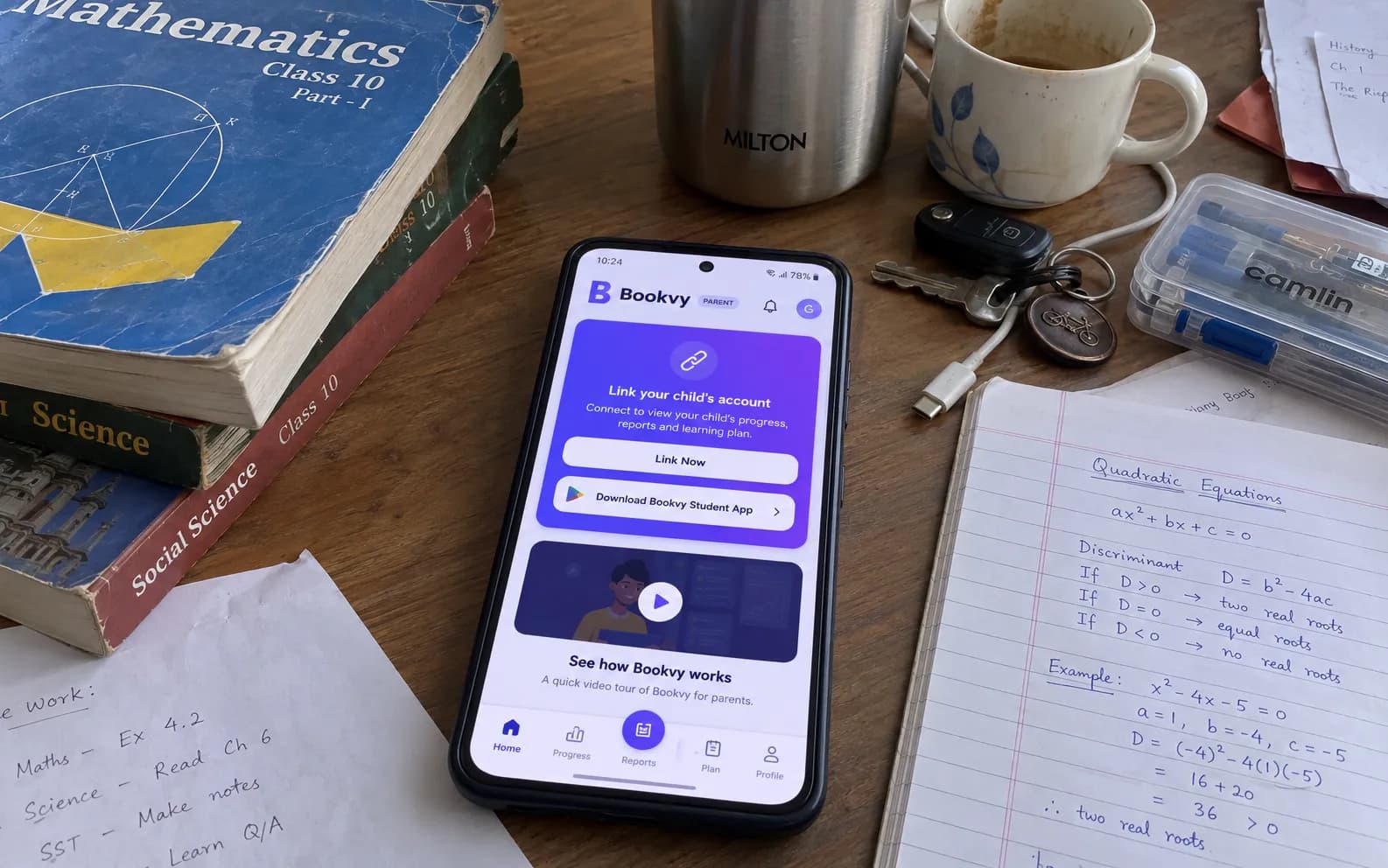
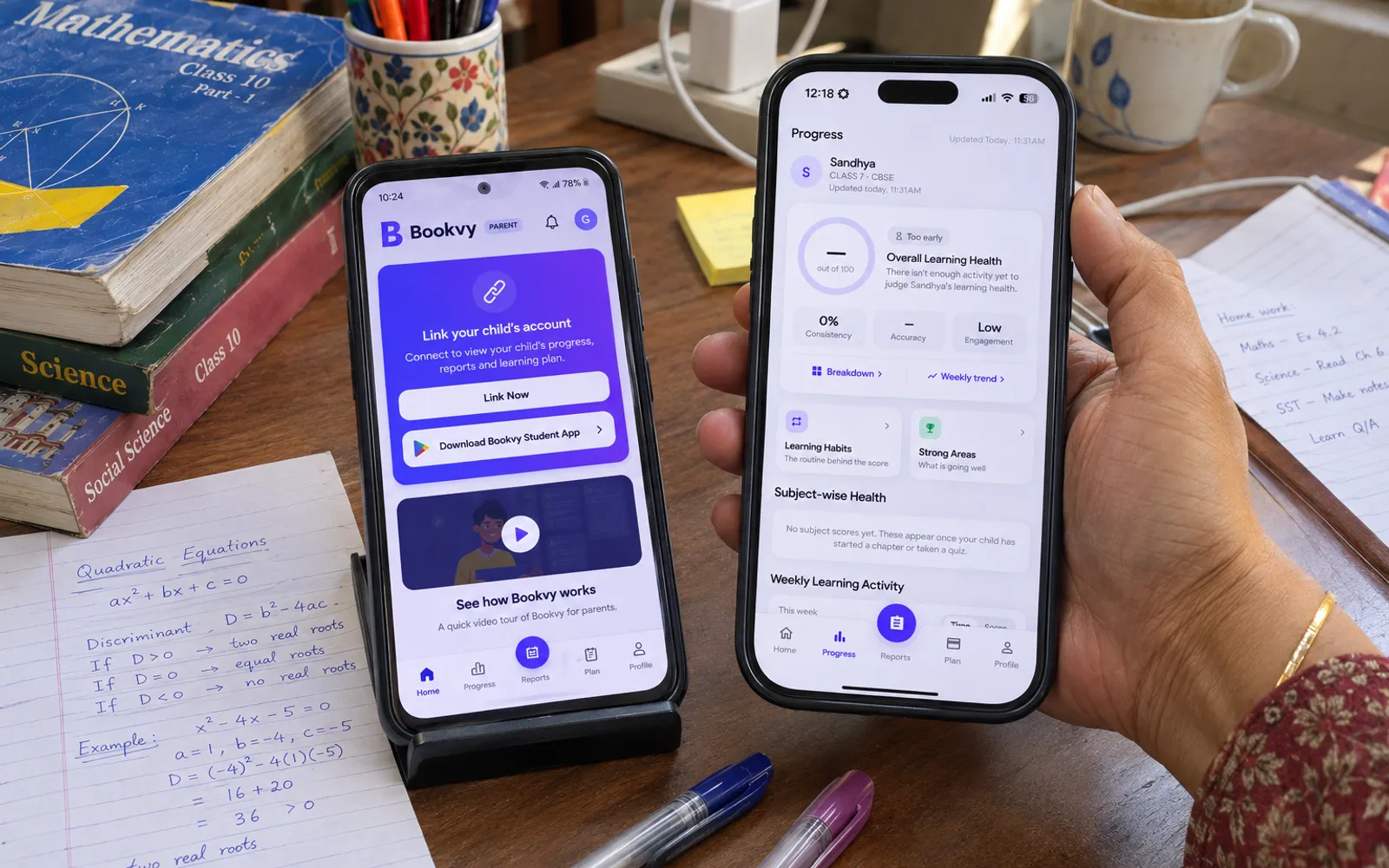
- The parent app pays for itself. Parents link to their child with a QR code or short code and get a daily summary, a learning health score and downloadable reports. That gives families a reason to keep the subscription going.
- Build for the phones students actually have. Most students use low-cost Android phones, so the app was designed and tested for them first.
- Translate everything. Every screen in Bookvy is in English and Hindi. Translation is cheap if you plan for it, and expensive if you add it after the strings are scattered through the code.
- Collect sensitive data only where you need it. Bookvy's Aadhaar scan and live photo check happen only for paid exam registration, not at sign-up.
- Streaks and XP matter. Studying is a daily habit, and streaks, achievements and a leaderboard give students a reason to open the app on days they don't feel like it.
Working with me on an education app
I build learning apps with Flutter app development for Android and iOS, and the API and admin panel through backend development. Most clients start with a scoped first version through MVP development. You get a fixed-scope proposal in INR, one price and one timeline.
If your app is closer to entertainment than learning, my guide to OTT app development cost in India covers streaming in detail. For a quick estimate, try the app cost calculator, see how I work on hiring an app developer in India, or tell me what you're building.