I build Shopify stores from Mumbai, mostly custom and headless storefronts for Indian brands, and I've built more than 30 of them over three years. Most people who ask me about cost have already received two quotes that are ten times apart. Usually that's because one quote is for setting up a theme and the other is for designing and building a store from scratch. They are different products, so the first job is working out which one you need.
The four kinds of Shopify project
Almost every Shopify quote in India falls into one of these four buckets. The ranges below are what I see in the market for a reasonable freelancer or small studio, not a rate card. Agencies with account managers sit higher. Someone on a gig site will sit lower, often with the risks that come with that.
| Project type | What it covers | Typical cost (INR) | Approx. USD |
|---|---|---|---|
| Theme store setup | Free or paid theme, your logo and colours, up to ~50 products, payment, shipping and policy pages | ₹15,000 – ₹60,000 | $180 – $700 |
| Theme customisation | A paid theme plus custom sections, product page changes, app wiring, some Liquid code | ₹50,000 – ₹1.5 lakh | $600 – $1,800 |
| Custom theme | Your own design built as a Shopify theme in Liquid, editable in the theme editor | ₹1.5 – ₹4 lakh | $1,800 – $4,700 |
| Headless store | Custom Next.js storefront on Shopify's Storefront API, Shopify checkout | ₹3 – ₹12 lakh+ | $3,500 – $14,000 or more |
My own Shopify projects start from ₹60,000, and my quote form groups budgets as ₹60,000–₹1.5 lakh, ₹1.5–4 lakh, ₹4–12 lakh and ₹12 lakh+. I agree a fixed scope and price before any work starts. If what you need is a clean theme store with your products in it, I'll tell you that, and a cheaper setup may be the right call.
Theme store setup
This is the entry point. You pick a theme from the Shopify Theme Store, the developer configures it, loads products, connects a payment gateway, sets shipping rates and writes up the policy pages. For a new brand testing demand, this is often the right spend. The work is mostly configuration, so be wary of paying custom-build prices for it.
Theme customisation
Most growing stores live here. The theme is fine, but you want a size guide on the product page, a bundle section, a different cart drawer, or a quiz. A developer edits Liquid, JavaScript and CSS inside the theme. Price follows the number of changes, so get them written down as a list before you ask for a quote.
Custom theme and headless
A custom theme means your own design built in Shopify's theme language, so your team can still use the theme editor. Headless means a separate storefront that reads products from Shopify and hands the shopper to Shopify checkout. I compare those two properly in headless Shopify vs a theme. Short version: go headless only when you can name the thing a theme cannot do.
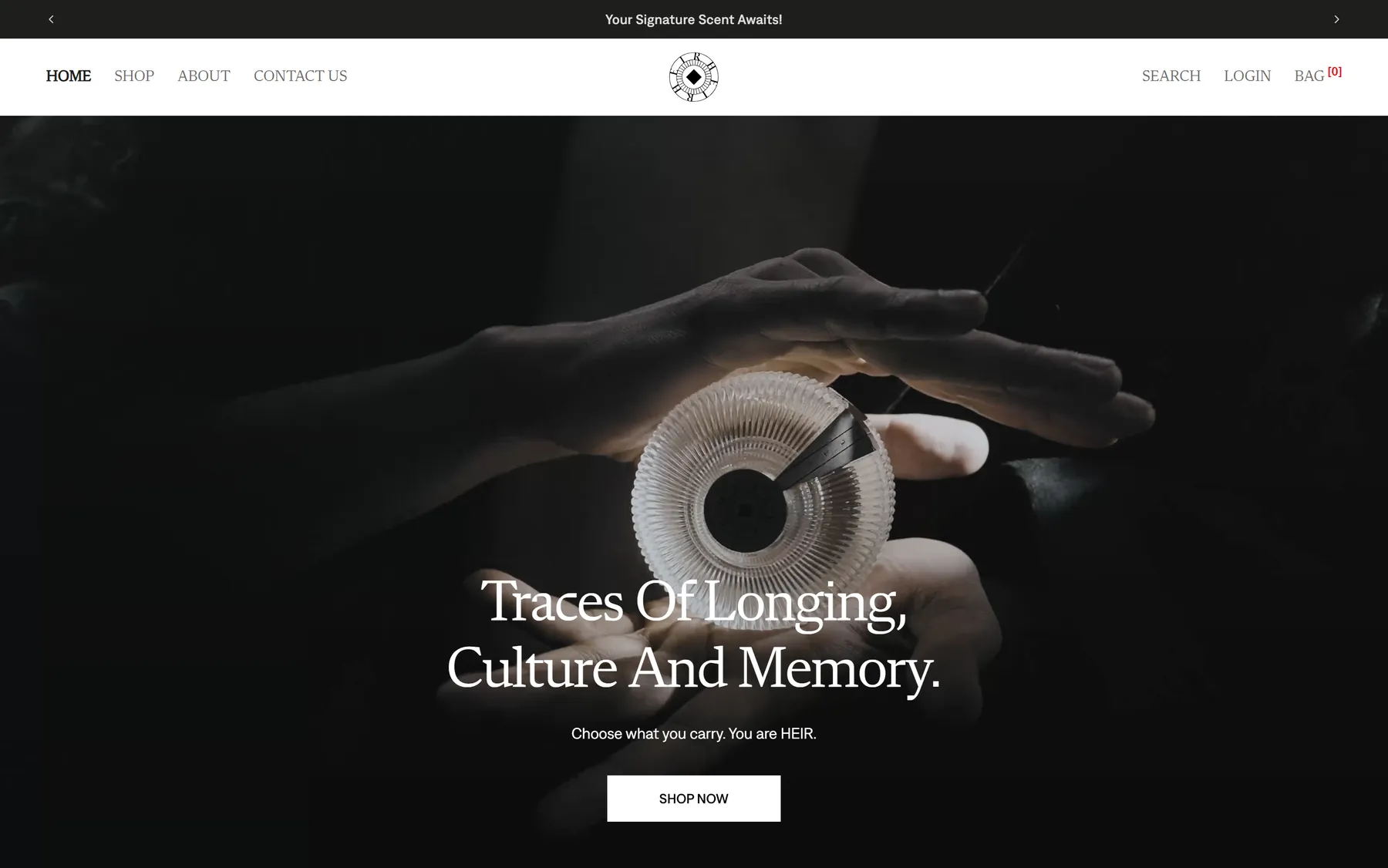
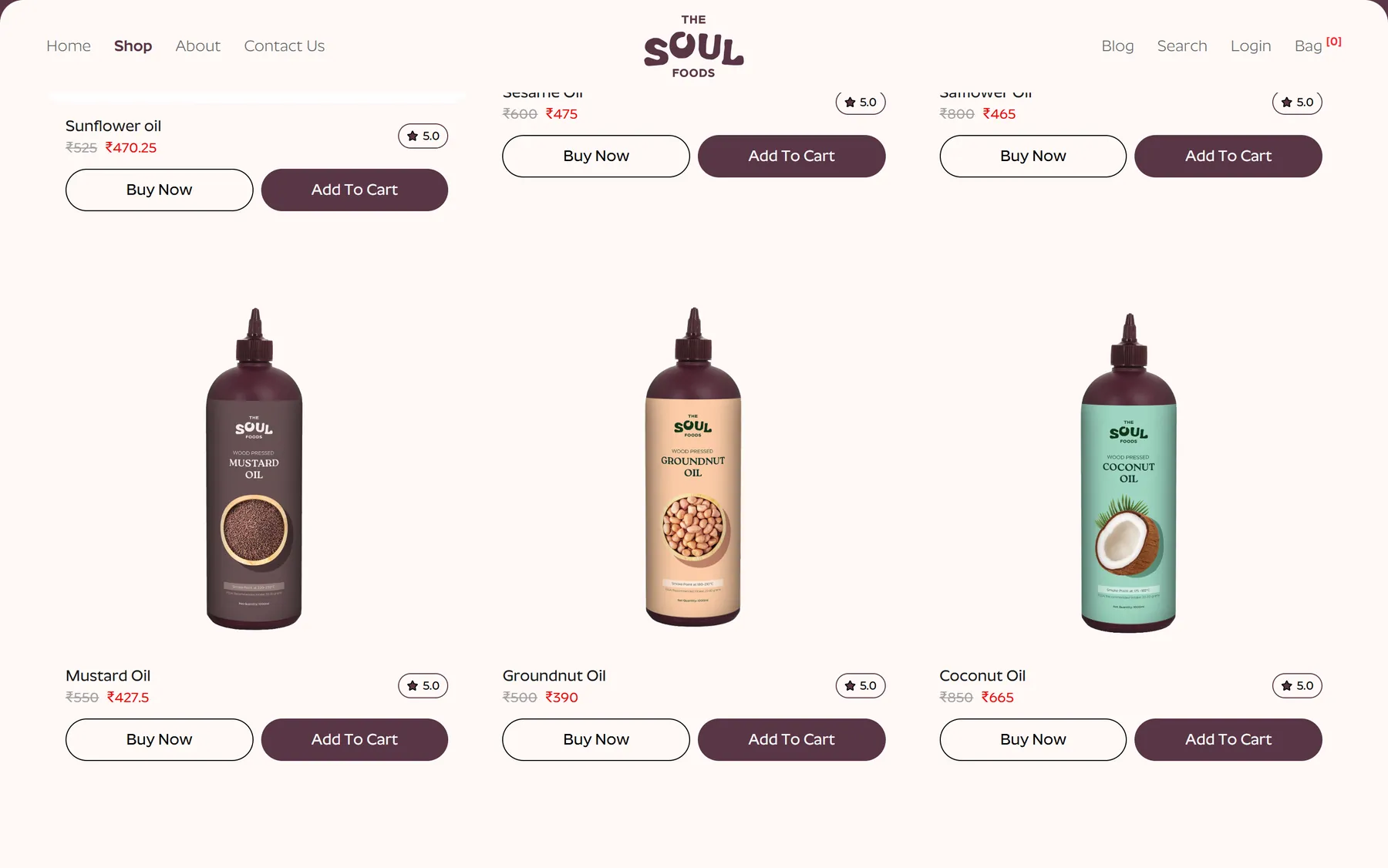
Two examples from my own work. HEIR is a headless fragrance store with six products, where the pages needed to carry a ₹4,500 price and the client still runs everything from Shopify admin. Ishikaa Jain is a made-to-order couture label with 41 garments, where body measurements travel onto the order line. The Soul Foods sells seven oils in two sizes, and the storefront explains what each oil is for. None of those would have been a ₹20,000 theme setup, and none needed to be a ₹15 lakh build either.
Hourly rates vs fixed price
Shopify developers in India charge roughly ₹500–₹1,000 an hour at the junior end and ₹1,000–₹3,000 an hour for someone experienced, which is about $6–$12 and $12–$35. Agencies usually bill ₹2,500–₹6,000 an hour once project management is folded in. Those are the same bands I use for app work in hiring an app developer in India, because the people overlap.
For a full store build, I prefer fixed price, and most clients do too. Hourly makes sense for small, unclear jobs: fixing a broken app integration, tweaking a section, speeding up a slow theme. For a new store, hourly billing means you carry all the risk of the scope growing. A fixed price with a written feature list moves that risk to the developer, which is where it belongs, since they are the one estimating.
Compare quotes by scope, not by total. A ₹40,000 quote that leaves product upload, policy pages and checkout testing to you can cost more than a ₹70,000 one that includes them.
Running costs after launch
The build is a one-time cost. The store also costs money every month, and people forget this when they budget. Shopify prices its plans in rupees for Indian stores and changes them from time to time, so check the current numbers on Shopify's pricing page before you commit.
- Shopify plan. Basic is the usual starting plan and runs in the low thousands of rupees a month, cheaper if you pay yearly. Grow and Advanced cost several times more. GST is added to the subscription for Indian businesses.
- Third-party transaction fee. Shopify Payments is not available in India, so you will use a gateway like Razorpay, Cashfree or PayU. Shopify then charges its own small percentage on each order made through an external gateway, lower on higher plans.
- Payment gateway fees. Indian gateways typically charge around 2% per transaction plus GST on standard methods, with rates varying by method and by what you negotiate.
- Apps. Reviews, WhatsApp, COD verification, subscriptions, shipping. Many have free tiers; a realistic small store spends ₹2,000–₹10,000 a month once it is selling.
- Theme licence. Paid themes are a one-time purchase, usually a few hundred dollars. Headless stores add hosting instead, which can be free or close to it on small traffic.
- Domain and email. A few thousand rupees a year.
My rule of thumb: if an app is doing something a few lines of theme code could do, the code is often cheaper within a year. If it is doing something hard, like subscriptions or shipping label generation, pay for the app.
Freelancer or agency
An agency gives you a team: a designer, a developer, someone to answer the phone. That helps on large stores with many stakeholders. On a typical Indian D2C store, it often means paying for layers you do not need while a junior does the code. An experienced freelancer is cheaper per hour and you talk to the person writing the code, but you depend on one person being available. I wrote up the general tradeoff in freelance developer vs agency; it applies to Shopify work almost line for line.
If you are in Mumbai and want to meet in person, see hiring a developer in Mumbai. Most of my Shopify work happens over calls and a staging link, though.
What actually drives the price
- Design. Using a theme's design is cheap. Designing every page from scratch is where custom work starts.
- Catalogue size and data. Ten products are an afternoon. Five hundred products with variants, metafields and messy supplier spreadsheets need import scripts and cleanup.
- Unusual buying logic. Measurements, bundles, build-your-own boxes, subscriptions, B2B pricing. Each one is real work.
- Integrations. ERP, warehouse, shipping aggregators, WhatsApp, accounting. Every connection needs testing and someone to own it when it breaks.
- Migration. Moving from WooCommerce or another platform with customers, orders and URL redirects so you don't lose search rankings.
- Content readiness. A brand with photos, copy and prices ready launches faster and cheaper than one that decides as it goes.
A sample budget
Here is how I'd budget the first year for a small Indian D2C brand with around 20 products on a customised theme. Treat it as a shape, not a quote.
| Item | One-time | Monthly | First year (approx.) |
|---|---|---|---|
| Store build and customisation | ₹80,000 | – | ₹80,000 |
| Paid theme licence | ₹25,000 | – | ₹25,000 |
| Shopify Basic plan (yearly billing, plus GST) | – | ~₹2,000 | ~₹24,000 |
| Apps (reviews, WhatsApp, COD checks) | – | ~₹4,000 | ~₹48,000 |
| Domain and email | ₹4,000 | – | ₹4,000 |
| Small changes after launch | – | ~₹5,000 | ~₹60,000 |
| Total, before gateway and transaction fees | ~₹2.4 lakh |
Notice that the build is only about a third of the first year. Gateway and transaction fees scale with sales, so I leave them out of the fixed budget and plan for them as a percentage of revenue. Also keep money aside for photography and ads. A beautiful store with no traffic sells nothing.
Red flags in a Shopify quote
- No written scope. If the quote is a single number on WhatsApp, you will argue about what was included later.
- The developer wants the store in their name. The Shopify account, domain and any hosting should be in yours from day one. On my builds, ownership transfers to the client, not to me.
- "Custom design" that is a theme demo with your logo. Ask to see the design before the build, and ask which theme it is based on.
- A dozen apps for a basic store. Each app adds a monthly bill and often slows the site. Ask why each one is there.
- No mention of policy pages, contact details or Google Shopping setup. These are the pages that keep you out of trouble with payment gateways and ad platforms. Missing them is a common cause of a Merchant Center misrepresentation suspension.
- Unusually low price for headless. A headless store at a theme-setup price is either not headless or not finished.
If you want a fixed number for your own store, send me the product count, the pages you need and anything unusual about how people buy, through the Shopify quote form or the contact page. The Shopify development service page has the details of what a build with me includes.